


Welcome back to Attention Capital.
In The Sports Bond, we read the $300 billion in committed league media rights as a credit market hiding inside a media-spend wrapper. In The Behavioral Bid, we read Netflix’s $2.8 billion walkaway as a behavioral underwriting decision priced by 29 years of viewer telemetry. The league piece sits above the players. The behavioral piece sits behind the platform. The piece in the middle is the player as a credit issuer.
That piece has not been written.
Athlete commercial cash flow is the cleanest unbuilt analog to music royalty asset-backed securities. The contracts run with public-company counterparties on tenors that fit a structured note. The collection infrastructure runs through the major sports agencies. The audit trail is more straightforward than the music collection societies were when David Bowie walked into Prudential in 1997. A rated template for this asset does not exist. Capital is still flowing in as equity because no credit template has been built. Whoever structures the first-rated deal sets the comp for every subsequent deal referenced.
Sports rights are statutory at the league level. Athlete commercial cash flow is statutory at the player level. Same logic. Different issuer.
For the Attention-Constrained
The asset: Athlete commercial cash flow. Broadcasting contracts, endorsement portfolios, equity grants, licensing income. Documented in agency reporting and public counterparty disclosure. Tenors run 5 to 10 years for the upper tier of contracts. Counterparties are investment-grade public companies.
The frame: Capital is being deployed into athlete businesses as equity. SpringHill closed a $725 million round in 2021 with RedBird, Nike, Fenway Sports Group, and Epic Games as investors. Omaha Productions sold a 10 percent stake in March 2025 at a $750 million-plus valuation to Patrick Whitesell’s new Silver Lake-backed platform. Kevin Durant and Rich Kleiman’s Thirty Five Ventures has roughly $555 million in assets under management across more than 75 portfolio companies and Boardroom. Each of those vehicles is an equity story dressed around a documented commercial cash flow profile. None of those cash flows have been securitized.
The gap: A senior-secured credit template against documented athlete commercial cash flow does not exist at an institutional scale. The contracts are real. The counterparties are public. The reporting runs through CAA Sports, Wasserman, Klutch, Excel, Athletes First, Roc Nation, and the other top-tier agencies that already manage a combined playing-and-marketing book in the tens of billions. The legibility is there. The instrument is the gap.
The comp: Music ABS walked the arc from David Bowie’s $55 million 1997 issuance through Hipgnosis, Concord, Blackstone, and Recognition Music Group’s $1.47 billion rated public issuance in October 2024. Twenty-seven years from the first deal to the publicly rated securitization. The infrastructure took 70 years to build. The deal walked the next 27.
The window: A dozen athlete commercial books are ready for the first-rated deal today. Brady’s 10-year, $375 million Fox contract reads more like investment-grade corporate receivables than the cash flows currently supporting the rated music ABS market. Mahomes’s endorsement portfolio reads as a diversified counterparty pool on a five-year forward. The collection infrastructure is already inside the agencies. The methodology is the unbuilt layer.
The Unbuilt Asset Class

Walk into a structured products desk in New York and ask how athlete commercial cash flow gets underwritten as credit. The answer is silence. The bond desks do not cover it because the issuer is an individual, not a corporate balance sheet. The leveraged loan desks do not cover it because the cash flow profile does not fit existing covenant packages. The ABS desks understand the music analog, but the sports analog has not been built. The private credit desks have funded athlete-led media companies on the equity side, mostly through enterprise-value structures priced against forecasted growth.
That leaves the asset on the wrong side of every coverage map. Cash flow is paid by public companies, which allocate spending to media, marketing, and broadcasting line items. The contracts are negotiated by agents, who report to the athlete and the IRS rather than to a credit desk. The athlete is the issuer, but the issuer does not have a balance sheet that fits the standard covenant template. Three layers of intermediation between the cash flow and an instrument that knows how to underwrite it.
Capital has noticed the gap. It has filled the gap with equity.
SpringHill closed at a $725 million valuation in October 2021 with RedBird Capital leading and Nike, Fenway Sports Group, and Epic Games participating. The company sits atop LeBron James’s long-form commercial book: the Nike lifetime deal, the production slate, the brand consulting line, and the content licensing income. Equity priced what credit had no template to underwrite.
Omaha Productions printed at a $750 million-plus valuation in March 2025 when Patrick Whitesell’s Silver Lake-backed platform acquired a 10 percent stake. The company sits on top of Peyton Manning’s documented post-playing commercial book: the ManningCast distribution deal with ESPN, the Quarterback and Receiver Netflix series, and the production slate for Comcast and Disney. Equity again. No credit instrument in the cap stack.
Thirty Five Ventures runs roughly $555 million in assets under management across 75-plus portfolio companies, Boardroom Media, and a stake in the Philadelphia Union. Kevin Durant’s commercial book funds the family office, which in turn funds the venture book. None of that capital is borrowed against the underlying contracted cash flow.
That gap is not for lack of cash flow. It is for lack of template.
The pattern is the same one music walked between 1980 and 1997. Before Bowie, music royalties were paid by labels, collected by societies, distributed to artists, and treated as personal income. Capital that wanted exposure to that cash flow had to buy a label, buy a publishing catalog at a multiple, or wait for the royalties to clear and price the artist’s enterprise value on the back of them. The cash flow was real, the documentation was real, and the collection infrastructure was real. A credit template did not exist until David Pullman walked into Prudential with a credit file and an argument about behavior.
The obvious objection here is that the gap should already have been closed. CAA could build a credit arm. JPM could build the desk. A music ABS shop could port the template. None of them has. The reasons are structural. Agencies are commission businesses, not balance-sheet businesses, and the regulatory and capital requirements to hold paper sit outside the agency operating model. The bond and structured products desks underwrite against historical loss curves, and athlete commercial paper has no loss curve because no portfolio of deals exists. The music ABS shops are calibrated to royalty decay math, which is the wrong analytical engine for contracted endorsement flows. The private credit shops that fund athlete-led media companies have done it on the equity side because the underwriting was familiar there. Building the credit side requires a methodology, a servicing relationship with the agencies, and a willingness to write the first deal as an unrated bilateral while loss data accumulates. Three discrete bets. Each of them is outside the comfort zone of an existing desk. That is why the gap persists.
Athlete commercial cash flow is at the equivalent moment.
Why The Cash Flows Underwrite

The credit objection to athlete cash flow is the same objection raised against music royalties in 1996: too dependent on the individual, too short a forward window, too exposed to taste cycles and behavioral disruption. Each of those objections falls apart on inspection.
Start with the counterparty. Tom Brady signed a 10-year, $375 million broadcasting contract with Fox in 2022, the largest deal in sports television history at $37.5 million a year. The counterparty is Fox Corporation. The contract is documented. The cash flow obligation runs through 2033. From a credit standpoint, that is a 10-year unsecured commitment from a public company at an investment-grade-equivalent rating on a fixed payment schedule. Compare that to the typical music catalog ABS underlying, where the cash flow comes from streaming royalties collected by Spotify, Apple, YouTube, and several hundred other platforms, paid through publishers and societies, on schedules that depend on consumer listening behavior over 50-year decay curves. Brady’s Fox deal is structurally simpler than every music catalog in the rated market.
Stack the endorsement book underneath. Patrick Mahomes earned roughly $30 million in endorsement income in 2025 across a portfolio that includes Adidas, State Farm, Oakley, Hublot, T-Mobile, Hy-Vee, Frito-Lay, Procter & Gamble, DraftKings, and Hugo Boss. Each contract is a multi-year commitment by a public company counterparty. The aggregate book reads as a diversified portfolio of investment-grade trade receivables on a five-year forward. The cash flow is contracted. The counterparties are public. The reporting runs through the agency.
Read that as a fixed-income structure, and the math is straightforward. A senior-secured facility against the documented endorsement book at conservative advance rates calibrated against the contracted forward payments. The advance rate prices off counterparty quality, contract duration, termination provisions, and payment schedule. Brady underwrites the cleanest single-contract structure. Mahomes underwrites a diversified counterparty book. Different shapes of credit. Same underlying logic. Add the top 50 athletes in American sports and the addressable cash flow runs into the low billions on contracted forward commitments, before equity grants, licensing income, and appearance fees.
The tenor is the next objection that falls apart. Music catalogs typically use 30- to 50-year decay curves. The credit instrument has to underwrite a cash flow that compounds slowly through repeated discovery cycles. The deal pricing has to account for taste shifts, format changes, and platform migrations over multiple decades of forward holding periods. Athlete commercial contracts run 5 to 10 years. Brady’s Fox deal is 10. Mahomes’s Adidas deal is multi-year. Most major endorsement contracts run 3 to 7 years with renewal options. That is a tenor profile that fits a corporate revolver or a structured term loan. The decay risk that haunts music ABS does not exist on the same scale because the cash flow obligation is fixed during the contract term, regardless of audience behavior.
The counterparty is the third objection that inverts. Music royalty ABS depends on a diffuse pool of counterparties: thousands of streaming platforms, broadcasters, sync licensing buyers, and collection societies, each paying small amounts through a long chain of intermediaries. Athlete commercial contracts run with named public-company counterparties. Fox. Adidas. State Farm. Procter & Gamble. Each obligation is a single contract with a single named entity, paid on a defined schedule, and subject to documented termination provisions. A credit analyst can read the underlying obligations the way a syndicated lender reads a corporate revolver. The counterparty pool is the strongest part of the structure, not the weakest.
The audit trail is the fourth objection and the only one with a real basis. Music collection societies took 70 years to build the SoundScan, ASCAP, and BMI infrastructure that made Bowie Bonds possible in 1997. The agencies have been building the equivalent infrastructure on athlete commercial cash flow for the last 30 years, but the credit-side audit framework that converts agent reporting into rated paper has not been published. That is the institutionalization gap.
The cash flows underwrite. The credit template is the gap.
The Collection Infrastructure
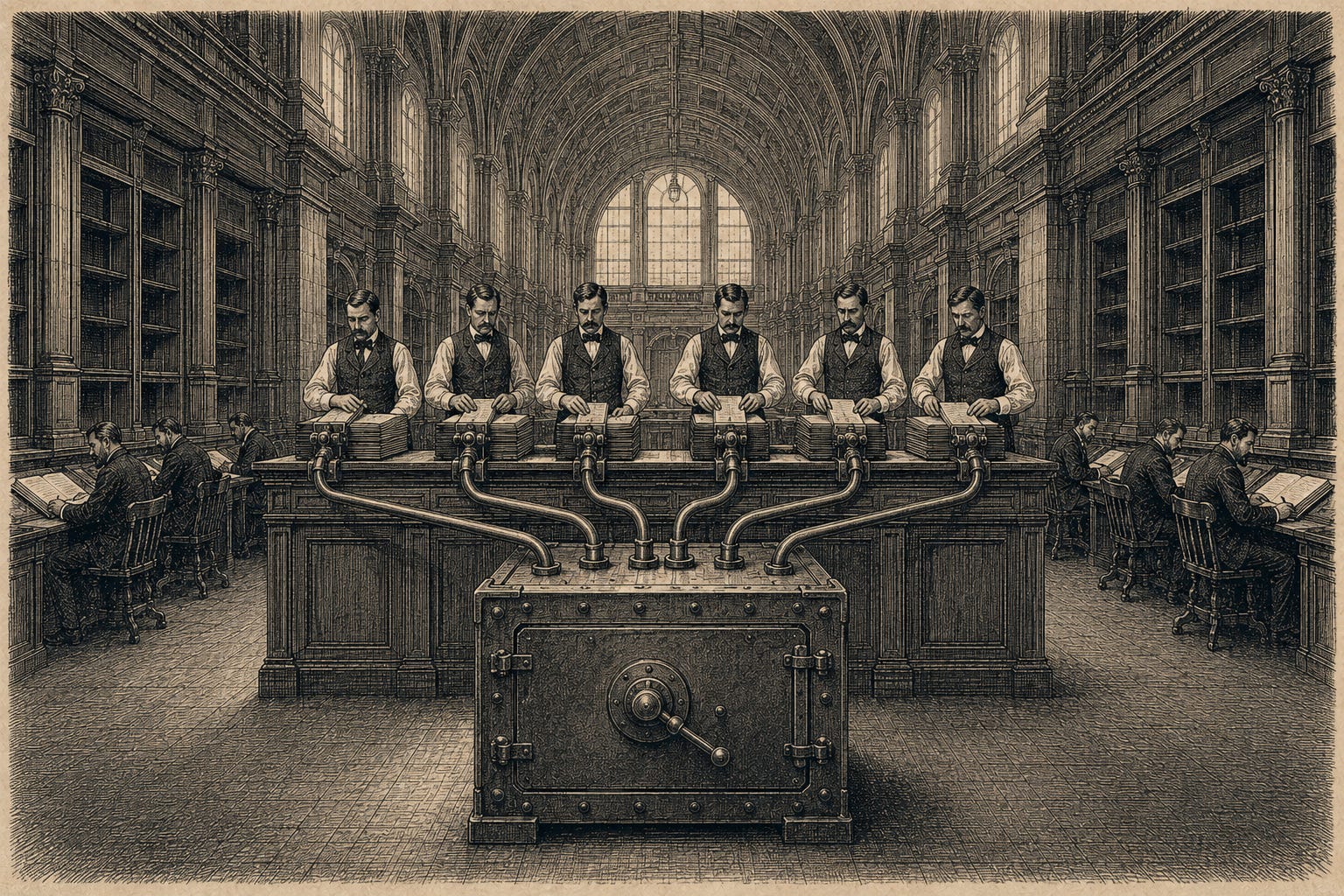
The piece every desk misses is that the agency layer is already running collection infrastructure on athlete commercial books at a depth that resembles what ASCAP and BMI ran on music royalties before Bowie. The agencies just have not been positioned that way because they have been pitched as talent representation rather than cash-flow administration.
CAA Sports manages roughly $20 billion in total athlete contracts, with approximately $5 billion of that in non-playing branding deals. The agency books and tracks every endorsement, every appearance, every licensing payment, every equity grant, every speaking fee for a roster that includes Shohei Ohtani, Josh Allen, Devin Booker, and several hundred other top-tier athletes. The reporting infrastructure inside CAA Sports is built to invoice, collect, distribute, and report on every commercial cash flow that runs through an athlete’s commercial book. That is the collection society infrastructure. It just has not been wired to a credit desk.
Wasserman runs over $9 billion in playing contracts and nearly $2 billion in endorsement deals across a roster of more than 4,000 clients. Klutch Sports, under Rich Paul, manages over $7 billion in total athlete deals across the NBA, NFL, MLB, and soccer, and has a strategic partnership with United Talent Agency that integrates the non-playing book into the broader commercial pipeline. Excel Sports Management runs roughly $6 billion in contract value across Tiger Woods, Cade Cunningham, George Springer, and others. Roc Nation runs $203 million in annual commissions across 190 clients. Athletes First dominates NFL representation.
Six firms touch every contract before it gets paid.
The missing piece is not the data. The missing piece is the credit-side audit framework that converts agent reporting into rated paper. That framework has to do four things. It has to verify the contract documentation against counterparty disclosure. It has to score the counterparty quality, contract tenor, and payment schedule against a structured credit template. It has to calibrate advance rates based on the counterparty mix, the athlete’s career stage, and documented historical collection performance. And it has to wire the agent reporting into a lockbox structure that captures payments at the source and distributes them through a credit waterfall.
That framework is a proprietary methodology AttnCap has been building since the founding thesis. The substance is the differentiation. What it scores and how it calibrates are the assets that print the deal. What it looks like on paper is what gets published when the first-rated deal clears.
The collection infrastructure is also the part that solves the bilateral negotiation problem. A credit desk that wants to underwrite the next major athlete commercial book does not have to assemble the contracts deal by deal. The agency already has them. The credit framework wires into the agency reporting at the entity level.
The athlete becomes the issuer. The agency becomes the servicer. The credit desk becomes the lender.
The structure is familiar to anyone who has structured a music ABS, a film slate facility, or a royalty securitization. It just has not been built on the athlete side.
That is the institutionalization gap. The first manager to bridge it owns the methodology and the agency relationships it runs through.
The Conceptual Tranche Structure

Any structured products desk that reads the athlete commercial cash flow profile would immediately tier it by counterparty quality, contract duration, and cash flow priority. Publishing the conceptual structure proves the asset thinks like a structurer. The specific advance rates, covenant triggers, and tier calibrations are part of the per-deal calibration methodology.
Read the structure in three tiers.
Senior: Broadcasting contracts and league-paid income. Brady’s $375 million Fox deal is the cleanest example. The counterparty is a public broadcasting company. The payment schedule is fixed across the contract term. The termination provisions are limited and well-documented. Cash flow priority sits at the top of the waterfall. Advance rate calibrates against the contracted forward payments at a discount that reflects counterparty quality and remaining tenor. Senior paper against this tier prices tight to comparable public-company corporate paper, because the underlying obligation is functionally a public-company commitment with a single named athlete as the conduit.
Mezzanine: The endorsement portfolio. Mahomes’s $27 million annual book across Adidas, State Farm, Oakley, Hublot, T-Mobile, and the rest sits in this tier. The cash flow is contracted, but the counterparty mix is more diverse, the contract terms are shorter, and the termination provisions are tied to performance and brand alignment clauses. The mezzanine tier carries counterparty diversification covenants: no single counterparty may exceed a defined percentage of the book, a minimum investment-grade composition, and replacement provisions upon contract termination. Advance rate calibrates against the weighted-average contracted forward at a discount that reflects the contract mix and replacement risk. Pricing sits between senior and high-yield equivalent.
Junior: Equity grants, licensing income, royalty streams, and appearance fees. This tier captures the cash flow that depends on outcomes the athlete does not fully control: equity value in invested companies, licensing income tied to product sales, royalty streams from likeness rights and trading cards, and appearance fees that depend on availability and demand. Junior paper prices widen because the cash flow is variable, but the tier still carries meaningful coverage when the senior and mezzanine tiers are paying through cleanly.
That is the conceptual structure. The methodology calibrates the specific advance rates per tier, the covenant triggers per athlete, and the waterfall priority by tranche. A credit desk that wants to underwrite an athlete commercial book starts with the conceptual structure and works backward into the documented contract pool. The methodology converts the documented pool into a rated facility.
The covenant package writes itself from the structure. Continuation of playing status as a senior trigger, because broadcasting and endorsement contracts typically terminate upon retirement or a major injury. Minimum counterparty diversification at the mezzanine level, because endorsement portfolios concentrate naturally as athletes climb in marketability. Information rights on agent reporting, because the credit desk needs continuous visibility on the underlying contract pool. Lockbox cash management on the contracted streams, because the structure depends on payment capture at the source. Replacement provisions when a contract terminates, because the mezzanine tier depends on a maintained counterparty mix.
Each of those covenants exists in the music ABS template. Each translates directly to the athlete template.
The translation is mechanical, not creative. The methodology is the part that calibrates the specific levels.
What is missing from the music template is the playing-status covenant, the structural feature that differentiates athlete commercial paper from music royalty paper. A music artist does not have to perform to collect royalties on an existing catalog. An athlete does. That is the credit-side adjustment. The senior tier requires continued playing or an active broadcasting status. The mezzanine tier requires a maintained public profile. The junior tier requires nothing beyond the existing licensing and equity positions. The covenant tiers map cleanly to the cash flow tiers.
That is the part that the conceptual structure makes visible. The specific levels are the part that the methodology delivers.
Why This Isn’t Venture Risk

The most common pushback on athlete commercial credit is that it sounds like a venture bet on the athlete’s career. It is not. The athlete has documented commercial history. The cash flow is contracted. The counterparties are public companies. Senior secured paper against contracted income with covenants on continued playing status and team performance prices tighter than most music catalogs in the rated market.
Compare the two underwriting profiles.
A venture investment in an athlete-led media company values the enterprise based on forecasted growth. The investor takes equity risk on the management team, the operating execution, the audience growth trajectory, the platform negotiations, and the cyclical advertising environment. The exit depends on a future strategic acquisition or public market valuation. The downside is total loss. The investor underwrites the future.
A senior secured facility against athletes’ commercial cash flow, priced against documented contracts already signed with named public-company counterparties. The lender takes credit risk on the counterparties’ payment obligations and on the athlete maintaining playing or active broadcasting status during the contract term. The exit is contractual amortization or refinancing. The downside is collateralized recovery against the remaining contract pool. The lender underwrites the present.
Those are two different deals.
The equity comp is venture math. The credit comp is corporate revolver math.
The historical comp that proves the credit math works is the Marvel film finance facility from 2005. Marvel raised a $525 million seven-year non-recourse facility from Merrill Lynch, structured through MVL Film Finance LLC and collateralized by 10 named character properties. The underlying cash flow was forecasted film performance against character IP. The lender priced it on retention math, character moat, and forecasted box office. The structure was novel for its time. The instrument was real.
The athlete commercial structure is tighter than Marvel’s on every dimension Merrill cared about. The cash flow is contractual rather than forecasted. The counterparty is investment-grade across a diversified mix. The collateral runs against documented commercial contracts instead of character IP exposed to taste cycles. The athlete commercial book has the same retention logic Marvel exploited, audience binding to the personality across multiple monetization cycles, with a stronger contractual layer underneath.
The risk profile is also tighter than music ABS on the cash flow side. Music royalty paper depends on consumer listening behavior over decades. Athlete commercial paper depends on contracted payments over years. Continued playing status is the binary credit event the athlete structure has to underwrite. Music catalog paper has to underwrite continued cultural relevance over a 30-year forward, which is a softer credit event. The shorter tenor and contracted payment schedule make the athlete structure easier to underwrite, not harder.
The structure is asset-based credit, not a growth bet. The collateral is documented. The counterparties are public. The waterfall is mechanical. The covenants translate directly from existing music ABS and corporate revolver templates.
That is the part the equity-flavored coverage misses. Capital deployed into SpringHill, Omaha Productions, and Thirty Five Ventures took venture risk on the management team and the operating model. Capital deployed into a senior secured facility against the underlying commercial cash flow takes credit risk on the counterparty and the contract. Two different risk profiles. Two different return profiles. Two different capital pools.
The credit pool has been waiting for the instrument.
The Bear Case
Any structured credit desk that has read this far is already building the kill list.
The kill list is the strongest part of the deal. A lender that has not stress-tested the downside does not deserve the spread.
The catastrophic event is a career-ending injury. Brady’s Fox contract survives that risk because the cash flow is paid by a broadcaster in exchange for post-playing services. The injury hits the playing income. The broadcasting line keeps paying. For active players, the senior tier handles injury through advance rates calibrated to absorb early-term shocks and through disability insurance riders that translate directly from existing music ABS templates on artist death and disability. The senior tier sizes coverage to withstand the first 18 to 24 months of contract life, the window in which most injury risk concentrates.
The reputation event is the next item on the list. Brand alignment clauses, morals provisions, and termination rights are part of every major endorsement contract. The credit-side response is contract-by-contract diligence on termination rights at origination, plus replacement covenants in the mezzanine tier that require the agency to rebuild diversification within a defined window upon contract termination. The agency carries the operational obligation to rebuild the book. The credit desk holds the covenant that enforces it.
Retirement acceleration kills the long-term endorsement book at a faster rate than contract amortization. Most endorsements terminate or step down on retirement. The credit response is shorter tenor on the mezzanine, with the senior tier sized against the broadcasting line that survives retirement and the post-playing media work that builds on it. Brady is the proof case. The Fox cash flow grew on retirement.
Sponsor withdrawal at the counterparty level is a corporate credit event. The mezzanine tier’s diversification covenant absorbs single-counterparty failure the way a corporate revolver absorbs a single trade receivable default. Replacement provisions activate when concentration exceeds defined thresholds. The structure shifts the operational burden to the servicer.
Agency concentration is the structural tail. If the servicing agency loses the athlete relationship mid-deal, the collection infrastructure on which the credit depends can rupture. The response is information rights enforceable against the athlete, lockbox cash management that survives agency transition, and covenant provisions that require continuity of reporting standards regardless of agency identity. The athlete signs to the structure. The agency services it.
Labor disputes, league lockouts, and platform shifts in sports media are macro events that affect timing more than principal. The senior tier sizes against base-case cash flow with stress-case coverage that absorbs short-term disruption. The mezzanine and junior tiers price wider to absorb the macro tail.
The list runs longer. Each item carries a structural response. The methodology calibrates the structural response per deal. The risks are real. The structure is the answer.
The Development Arc

Music ABS walked a specific arc from Bowie Bonds in 1997 to Recognition Music Group’s rated public issuance in October 2024. The arc is the comp for what athlete commercial credit walks next.
Bowie raised $55 million in 1997 against the future royalty stream of his pre-1990 catalog. The deal was sold to Prudential at a 7.9 percent coupon on a 10-year amortization, structured by David Pullman. The deal was bilateral, unrated, and structured on a private-placement basis. The credit file consisted of the historical royalty stream, the catalog quality, and the artist’s contractual rights. Bowie was not the largest cash flow available for securitization. He was the first artist willing to sit for the credit underwriting.
Between 1997 and the late 2010s, music royalty paper traded almost entirely on bilateral, unrated, private terms. Hipgnosis Songs Fund raised billions starting in 2018 on a publicly listed equity vehicle that bought catalogs and serviced the royalty cash flow. Concord built a portfolio across publishing, recorded music, and theatrical. KKR raised dedicated music finance funds. Blackstone acquired Hipgnosis Songs Fund for $1.6 billion in 2024 and rebranded the operating entity as Recognition Music Group in March 2025.
The rated public issuance arrived in October 2024. Recognition Music Group raised $1.47 billion through Lyra 2024-2 and Lyra 2024-3, the largest music rights asset-backed securitizations on record and the first music ABS publicly rated by Fitch and Standard & Poor’s. A follow-on $372 million tranche cleared in July 2025. Twenty-seven years from the Bowie deal to the rated public issuance. Two and a half decades of methodology refinement, deal experience, and infrastructure build-out, capped by a securitization that priced on a credit basis against a defined pool of compositions and master recordings.
Athlete commercial credit will walk an accelerated version of the same arc. The starting point is the unrated bilateral. The methodology gets refined against live portfolio performance over the next three to five years. Ratings agencies get comfortable with the structure as the historical data accumulates and the deal pool diversifies. The rated public issuance arrives faster than music did because the infrastructure already exists in adjacent markets, and the credit-side templates have been validated by precedents in music, film, royalty, and corporate revolvers.
That accelerated arc is the opportunity for the first operator. The unrated bilateral phase is the franchise-building phase. Each deal closed adds to the historical data set. Each deal closed proves out the covenant package. Each deal closed builds the methodology that becomes the template every subsequent operator references. The operator who walks the unrated bilateral phase first walks the rated public phase. The operator that walks the rated public phase first owns the category for a decade.
This is the exact arc Pullman walked in music. Recognition Music Group’s $1.47 billion issuance in 2024 traces directly to the methodology Pullman built in 1997. The franchise compounded for 27 years. The compounding ran through the methodology, the deal experience, and the historical performance data, not through the size of the first deal.
The first deal does not have to be large. It has to be first.
The Comp Gets Printed By Whoever Moves First
A dozen athlete commercial books are ready for the first-rated deal today. Brady’s 10-year Fox contract underwrites a meaningful facility against a single broadcaster counterparty. Mahomes’s endorsement portfolio underwrites a diversified facility against a pool of public-company counterparties. Manning’s post-playing media book through Omaha Productions is backed by documented multi-year contracts with ESPN, Netflix, NBCUniversal, and Disney. LeBron’s Nike lifetime contract, ESPN broadcasting income, and SpringHill production slate underwrite a structured deal across three tiers of cash flow. Durant’s commercial book through Thirty Five Ventures sits on documented contracts that fund the family office, which in turn funds the venture book.
Each book has been priced by equity capital because no credit template exists. Each book is available for the first manager who walks in with a credit file and a methodology.
The cash flow exists. The documentation exists. The collection infrastructure exists. The template is the gap.
Whoever structures the first-rated deal sets the comp for every subsequent deal referenced. The spread becomes the curve. The curve prices the next ten deals. The historical performance of the first deal becomes the dataset that rating agencies reference when rating the second.
The Bowie deal did this for music. The 2005 Marvel facility did this for character IP. The 2024 Recognition issuance did this for rated music ABS. The first athlete commercial bond covers the athlete commercial category. The structure of the first deal becomes the structure of the next fifty. The methodology that prices the first deal becomes the institutional standard.
The next 18 months will determine who walks the arc. The agencies are ready. The contracts are documented. The counterparties are public. The credit-side methodology is the unbuilt layer.
Pullman did not invent music royalties. He built the instrument that taught capital how to price them.
Athlete commercial cash flow waits for the same architect.
The first one prints the comp.
Why Subscribe
Because attention has produced the largest contractually durable cash flow profile inside the athlete economy, and capital is still pricing it as venture risk.
Every week, Attention Capital reads the deals other publications miss, applies the AQS framework to the assets that should be financeable, and draws the curves the sell side has not yet drawn. League rights is one curve. Athlete commercial cash flow is the next. Creator credit, streaming behavioral data, and brand-as-bank are the curves underneath. Each piece builds on the last.
If you work in finance, this is where you see where the next $50 billion of fund deployment lands before the term sheets are written. If you work in media or live entertainment, this is where you see how capital is starting to price the asset you have been building. If you allocate to private credit, this is the playbook for the asset class that does not yet have a desk.
For more on attention as an asset class, visit attncap.com. Institutional research now available.
The piece in front of you is about a missing instrument. Athlete commercial cash flow runs in the tens of billions through public-company counterparties on contracted tenors that fit a structured note, and no credit template exists for it. Capital is still flowing in as equity because no one has built the credit side. Bowie's catalog waited 27 years for the rated public issuance that finally priced it. The next architect does not have to wait that long. The first deal prints the comp for the category, and the window is open right now.
The playing-status covenant is the one piece that makes this harder than the music comp, not easier. A Bowie bond pays out whether he tours or not, but a Brady-style senior tranche needs him functionally employed, so the credit event isn't bad sales, it's a torn ACL. That's exactly why the senior tier leans on broadcasting income instead of playing contracts, Fox pays Brady to talk, not to play, so the cash flow survives the one risk that kills everything else. The real constraint isn't the structure, it's that no agency wants to be first to open its books to a credit desk and get scored instead of just commissioned. Who actually walks through that door first, an agency building the credit arm in-house, or an outside shop showing up with the methodology the way Pullman did at Prudential?