

The Behavioral Bid
Paramount bought the library. Netflix owns the machine that prices it.

Welcome back to Attention Capital.
Two events happened within six weeks of each other. In late February 2026, Netflix walked away from an $82.7 billion signed agreement to acquire Warner Bros. Discovery. Paramount Skydance raised its bid to $110.9 billion in cash, $31 per share, and Netflix collected a $2.8 billion breakup fee and left the table. On April 16, Reed Hastings filed notice that he is leaving the Netflix board in June. The SEC filing carried the line, stated with unusual specificity: his decision “is not as a result of any disagreement with the Company.”
The conventional reads arrived on schedule. One crowd called it a clean legacy exit from the man who stepped back from operations in 2023 and has been building a ski resort in Utah. The other crowd looked at the timing, two weeks after Netflix lost the library to Paramount, and reached for a sinister story. Both readings mistake the surface for the structure.
The real story is what Netflix actually built, why it didn’t need WBD’s content library to win, and what Paramount just paid $110.9 billion to find out the hard way.
This is the asset class catching up to what Hastings priced 30 years ago.
For the Attention-Constrained
The walkaway: Netflix abandoned an $82.7 billion signed agreement to acquire Warner Bros. Discovery in late February 2026. Paramount Skydance raised its bid to $110.9 billion in cash, $31 per share. Netflix collected a $2.8 billion breakup fee and let the library go.
The market signal: Two weeks later, Reed Hastings filed notice that he is leaving the Netflix board in June. The SEC filing carried the line with unusual specificity: his decision “is not as a result of any disagreement with the Company.” Two filings, one story.
The behavioral thesis: Netflix has been collecting behavioral telemetry since 1999. Every pause, every rewind, every household viewing pattern, priced into a greenlight machine that now functions as the largest private credit desk in media. The asset Netflix prices is audience behavior. WBD’s library priced below $31 per share against that file.
The implication: Paramount is about to own roughly a quarter of the watchable general-entertainment content produced in English in the last 70 years, without the behavioral infrastructure that prices which of that content still commands viewer habit at a carrying cost that clears. Behavioral data infrastructure is now a balance-sheet item, not a tech-budget line. Every media borrower, every catalog roll-up, every streaming operator gets the same question going forward: what is your behavioral inference capacity relative to the scale of the library you are asking me to finance?
The Thing Netflix Built That Nobody Writes About
Every pause. Every rewind. Every episode three people in a household started at different times and only one finished. Every trailer skipped. Every cold open replayed. Every four-word search query that returned a show nobody thought they wanted.
Netflix has been collecting that telemetry since 1999, at a granularity no content company had ever built tooling for. Blockbuster had receipts. HBO had cable-bill line items. The broadcast networks had Nielsen. Nielsen is a panel of roughly 42,000 households pretending to describe a country of 330 million. By 2010, Netflix had every view, every second, every device, on a population that already exceeded the entire cable subscriber base of the United States.
That data never sat in a warehouse gathering dust. It priced decisions. House of Cards got the green light because the overlap between Fincher viewers, Spacey viewers, and political-drama viewers described a defined audience at scale. The math was a credit file.
Fifteen years later, that capability is the most advanced behavioral underwriting machine in entertainment. It tells Netflix whether to pay $200 million for a Knives Out sequel, commission a Korean thriller at a tenth of the price, license a library window from Sony, or walk past it. The system answers one question over and over: what will the audience actually come back for, at what price, at what frequency, with what elasticity when the price changes?
That question is the core of any credit analyst’s work. Netflix is, functionally, the largest private credit desk in media, except that the asset it prices is audience behavior rather than cash flow. Which turns out to be the same thing.
Netflix is the largest private credit desk in media. The asset it prices is audience behavior. Which turns out to be the same thing.
This is the part to sit with. The common framing of Netflix as a “streaming company” is a shelf-label borrowed from retail, and it has done real damage to how capital allocators understand what Netflix actually is. The streaming service is the user interface. The subscription is the payment rail. The content is the inventory. The behavioral data system is the asset. Every other asset at Netflix is downstream of that one.
Walk through what the infrastructure actually runs. The recommendation engine is the visible layer, and analysts obsessed over it for years without understanding it was the tip of a larger structure. Underneath the recommendation engine sits a retention model that scores each title based on completion rate, restart rate, bail-out point, device class, and co-viewing pattern. Underneath the retention model sits a cohort engine that assigns every Netflix household to dozens of overlapping taste communities, each with its own elasticity to price, churn profile, tolerance for release cadence, and responsiveness to marketing. Underneath the cohort engine sits a greenlight system that translates all of that into forward cost-per-retained-household math, title by title, window by window.
Stranger Things ran five seasons because the cohort engine showed the show was holding a subscriber segment that would otherwise have quietly churned. Squid Game got a $21.4 million season one budget because Netflix had been buying Korean content into Netflix Korea for six years and had the local retention data to underwrite a show neither Bong Joon-ho nor Park Chan-wook had endorsed. The Crown ran six seasons because the prestige-drama cohort is dense, sticky, low-churn, and the production economics cleared every year.
Every one of those decisions was the model speaking through the greenlight committee, in the language of retention cohorts and carrying cost.
That system is what told Netflix to walk away from Warner Bros. Discovery.
What Walking Away From $82.7 Billion Tells You
Take Netflix at its word. The February walkaway means the behavioral data priced WBD’s library below $31 per share. Not below $110.9 billion nominal. Below $110.9 billion net of integration costs, library overlap, churn risk, and opportunity cost on the cash. Netflix ran the model, and the model said the audience relationship they already owned was worth more than the content library they would have to buy.
That is the sentence a generalist reader should re-read.
Conventional M&A logic in media has held, for 40 years, that scale is the asset. More titles, more eyeballs, more leverage with talent, more bargaining power with distributors. It is the story every content roll-up has told its investors since Gulf+Western. iHeart told it. Tribune told it. Gannett told it. AT&T told it when it bought Time Warner for $85 billion in 2018, and again when it sold what was left of Time Warner into Discovery for a mediated loss three years later. The scale story works until the underlying behavior that made the assets productive moves elsewhere.
Netflix’s behavioral machine can price the moving part. That is the edge. Paramount’s bid, read against Netflix’s walkaway, is the clearest demonstration in years of the gap between buying the appearance of an asset and buying the asset.
There is a second, quieter read of the walkaway worth naming. Netflix declined and collected $2.8 billion for doing so. A breakup fee at that scale is structural capital, not a consolation check. It will fund at least a full year of Netflix’s original programming budget for a non-flagship region, or fully cover the buildout of a serious new behavioral tool generation, or sit on the balance sheet as dry powder for the next catalog window that comes up at a real clearing price. The walkaway was a priced no.
That distinction is a credit distinction. A no is what equity investors do. A priced no is what credit desks do.
Bowie, Hipgnosis, And The 30-Year Lesson
There is a direct parallel in music catalogs, and it is worth walking through because the sequence repeats.
In 1997, David Bowie issued $55 million in bonds secured by the royalty streams from his pre-1990 catalog. Prudential bought the paper at 7.9% with a 10-year maturity. The instrument was a securitization of behavior: specifically, the behavior of people continuing to listen to, buy, and license David Bowie for movies and ads. Bowie’s argument to credit was that his music’s usage pattern was stable enough to service debt.
That argument worked because a specific infrastructure made the usage pattern legible. ASCAP and BMI had been tracking performance royalties since the 1930s. SoundScan made retail sales legible starting in 1991. Mechanical and sync royalties flowed through published pipes with audit trails. A credit analyst could pull 30 years of cash flows on a catalog and underwrite the decay curve with real math.
Bowie was the first deal only because Bowie and his advisor, David Pullman, had the imagination to walk into Prudential with a credit file. The infrastructure had already been built, piece by piece, across 70 years.
Fast forward. In the 2010s, music publishing and master catalogs became an asset class. Hipgnosis raised billions in public markets and private rounds to acquire catalog. KKR launched a fund. Pimco did structured deals. The underwriting ran on retention curves, sync probability, territory-by-territory usage elasticity, DSP stream decay by release year, and cohort stickiness. It was credit work.
Blackstone paid $1.6 billion for Hipgnosis Songs Fund in 2024 because the infrastructure existed to make the asset underwritable at an institutional scale. Not because the songs got better.
Blackstone did not buy songs. It bought a behavioral data structure with songs attached.
Now flip the frame onto WBD. Warner Bros. Discovery owns Harry Potter, the DC library, Friends, HBO originals, the Turner brands, CNN, the Bugs Bunny catalog, and thousands of hours of scripted and unscripted programming that ran continuously on cable for four decades. Paramount’s bid values all of that, plus the distribution pipes, at $110.9 billion. The question nobody is asking with the right precision: where is the infrastructure that makes that library’s retention curve legible at the institutional scale inside Paramount?
It does not exist. It exists at Netflix. It exists in fragments at YouTube. It exists partially at Spotify. It does not exist at Paramount.
Paramount is buying the Bowie catalog without the ASCAP data.
The FaZe Autopsy, And Why Beast Is Not That
In 2022, FaZe Clan went public via SPAC at a $725 million valuation. Fifteen months later, the company was acquired by GameSquare for $17 million in stock. A market cap that once cleared $1 billion at peak became, in the end, a low eight-figure consolation prize.
The FaZe thesis sounded like an AQS thesis from a distance. A massive audience on YouTube, a dominant position in competitive gaming content, and a roster of creators with name recognition in a young demographic. If you squinted at the subscriber counts on the pitch deck, you would have said: audience relationship, durable behavior, cultural fluency, the whole stack.
The squint was the problem. The audience relationship lived with individual FaZe creators, not with the FaZe entity. The revenue lines were thin and lumpy: merch drops, tournament appearances, a few esports buckets. When creators moved, shifted their content, or simply grew up, the FaZe entity had no retained behavioral claim on the audience those creators had built.
FaZe had a logo. It did not have a lockbox.
Run the same frame over Beast Industries. MrBeast’s parent company now sits atop Feastables, Beast Games, Beast Mobile, a chocolate P&L with reported nine-figure annual revenue, a mobile operator partnership with T-Mobile, Step, and a studio operation. The consumer-packaged-goods lines produce receipts. The mobile line produces ARPU. The main YouTube channel produces watch-time telemetry across a subscriber base of roughly 400 million. The pieces are different assets, underwritten against different cash flows.
Beast’s revenue does not depend on the next video hitting. FaZe’s did.
That is a credit distinction, not a creative one. And it travels straight to the Netflix-Paramount question. A content library without a retained behavioral relationship is closer to FaZe than it is to Beast. The assets sit on the shelf. The question is whether the audience walks through the door without a reason they have been building for 15 years.
Spotter, And What $940 Million Against Back Catalog Teaches You
Spotter, the Los Angeles firm that buys out the rights to older YouTube videos from top creators, had deployed more than $940 million against YouTube back catalogs as of late 2024. They were doing the work nobody had named.
Strip away the sector and read the deal structure. Spotter pays a creator a lump sum. Spotter takes the future ad revenue from a defined catalog of videos for a defined term. The question they have to answer on every deal is the only one that matters: how durable is the behavior that generates ad revenue? If the videos keep getting watched for five years, the deal works. If viewing decays faster than Spotter modeled, the deal does not work.
That is behavioral underwriting with teeth. Spotter’s analysts built internal systems to model retention by video age, topic, creator, thumbnail style, CPM by advertiser category, seasonality, and algorithmic exposure risk. They priced behavioral durability before the institutional market had a name for it. The label “private credit against behavioral cash flows” only showed up later.
Netflix has been running the equivalent model, at a vastly greater scale, for a decade and a half. That is what was running when they looked at WBD’s library, and the numbers came back below the price Paramount was willing to pay.
Netflix did not have to trust its gut. They had the model. The model had every view Netflix had served against every Warner-adjacent title the service carried since 2013. It included search queries that returned HBO originals during the period when HBO licensed library titles to Netflix in the 2010s. It had years of completion, drop-off, and re-watch data on the Warner catalog titles Netflix had licensed windows against. The model knew why the Warner library had been valuable, why that value had held, and why the specific integration timeline Paramount was proposing would decay it.
Netflix did not decline on instinct. Netflix declined on data. The data was the moat.
The Paramount bid, by contrast, is priced using a different methodology. Paramount has Nielsen. Paramount has CBS affiliate feedback. Paramount has Pluto, which carries its own fragmentary viewing data. Paramount has the Skydance capital stack, which is a balance sheet, not a behavioral engine. The bid is data-thin relative to what a bidder needed to make the $110.9 billion math work.
Spotter would not have bid that number for that book of business. The Hipgnosis analysts would not have. The Netflix model refused it at a $28 billion discount to the clearing price that Paramount found.
The Spotify Sidebar
One cleaner cautionary file, from an operator with unlimited capital and a narrower version of the same problem.
Between 2019 and 2021, Spotify committed more than $1 billion to podcast acquisitions and exclusive talent deals, including a Joe Rogan licensing deal reported at above $100 million on the original 2020 signing and renewed in 2024 at up to $250 million, roughly $200 million combined for Gimlet, Parcast, and The Ringer, and $25 million for the Obamas’ Higher Ground production company. The thesis was that first-party podcast data captured within Spotify’s app would yield a behavioral signal strong enough to support catalog accumulation at an institutional scale.
The data partially materialized. The spend, in retrospect, did not clear the cost of capital. Spotify has been quietly writing down and restructuring the podcast business ever since. The methodology was correct. The execution ran early, and the deals cleared on a thinner signal than the math required. Apple TV+, which has spent an estimated $20 billion on content since 2019, runs a different but related version of the same story: cultural presence purchased, behavioral asset not built, because the underlying platform is device-first and its aperture on viewer behavior is narrower than Netflix’s by design.
All of it points back to the same question. Infrastructure first, catalog second. Catalog first, infrastructure never, is the iHeart path.
iHeart, And The Other Side Of The Same Trade
In 2008, Bain Capital and Thomas H. Lee Partners took iHeartMedia (then Clear Channel) private at an enterprise value of roughly $26 billion. The thesis was scale: the biggest radio distribution network in America, with more than 800 stations, 240 million weekly listeners at the peak, and owned billboards and events. The deal assumed that owning the pipes through which American audio flowed was a permanent position.
The audience had already started leaving. Spotify was founded in Sweden the year before the deal closed. Pandora was public. The iPhone had launched in 2007. Within five years of the iHeart LBO, the question was how fast terrestrial radio audio share would decline. By 2018, iHeart was in Chapter 11. The debt came off in bankruptcy. The audience never came back.
The iHeart failure was not slow. The 2008 LBO loaded roughly $20 billion of debt onto an asset whose underlying listening hours were already migrating. The combined effect was brutal. Revenue flattened, then declined. Interest coverage narrowed. The company spent a decade managing maturities and negotiating with creditors, selling billboard businesses, restructuring station clusters, and swapping debt for equity at progressively worse valuations. The final Chapter 11 in 2018 converted most of the debt into equity and left the original LBO sponsors with a write-down that became a case study in almost every leveraged finance program taught in the country.
iHeart is the autopsy that every media credit desk should have memorized. Bain and Thomas H. Lee did not pay $26 billion for bad assets. They paid $26 billion for the pipes that the audience used to use. That is the sentence.
They did not pay for bad assets. They paid for the pipes that the audience used to use.
Netflix walking away from WBD is the exact inverse trade. Netflix already owns the behavioral relationship with the audience that would consume WBD’s library. Netflix does not need to buy the pipes, because in behavioral terms, Netflix is the pipes. Paying $110.9 billion to buy content for an audience you already converse with every night is a different trade than paying $26 billion to buy pipes for an audience that is starting to walk out the door.
One trade is buying supply when you already own the demand relationship. The other trade is buying supply when the demand relationship has started to move.
Neither is automatically right. Both have to be priced. The discipline is identifying which trade you are in before you sign.
Paramount may be in the first or second trade. Their current behavioral visibility does not let them know. That is the underwriting problem underneath the bid.
What Hastings Actually Left Behind
Walt Disney died in December 1966. Disneyland had opened 11 years earlier. The animation pipeline, the parks division, the licensing arm, and the television programming infrastructure were already functioning without him. Roy O. Disney ran the company for another five years. Card Walker followed. When Michael Eisner arrived in 1984, what he inherited was a company with a founder-level architecture that had already outlived its founder by 18 years. The mistakes Eisner eventually made were his own. The bones he was working with were Walt’s.
Hastings is executing the same move in real time, consciously. He handed CEO duties to Ted Sarandos and Greg Peters in 2023. Since then, he has been decompressing at the board level, making it progressively harder for Netflix to claim it needs him to function. Powder Mountain is the public signal of that decompression. The April 16 filing is the institutional closing line.
Sarandos has been running the content side of Netflix against behavioral data for over a decade. Peters ran the product that captured much of that data. Neither man learned the greenlight loop in the last six months. The loop has been distributed across hundreds of analysts, producers, tech leads, and content partners for years. It is institutional. It is not in one head.
Look at the walkaway through that lens. Netflix did not need Hastings to decide against $82.7 billion, nor did it need him for the $31-per-share call. The mechanism that produced the decision is the same one that produced the greenlight for a $12 million Korean drama and the pass on a $200 million legacy sequel. The Hastings-era discipline has become Netflix-era discipline, which is another way of saying it has become bankable infrastructure.
The highest compliment you can pay a builder is that the thing keeps running without them. Hastings just collected it.
There is no “what happens when Reed leaves” story for Netflix because what happens when Reed leaves already happened, years ago, at the level that matters. He finished building the machine. The machine runs.
Paramount is in a different phase of its own founder arc. David Ellison is a new CEO operating on a recently assembled balance sheet. Skydance is a producer-turned-holding company. The team that will have to integrate Warner Bros. Discovery is months old in its current form. The architecture of behavioral decisioning at that company is being assembled in real time on top of the biggest media integration in history.
There is a separate point worth naming here. Sumner Redstone died in 2020. Shari Redstone spent five years overseeing the consolidation of National Amusements, ViacomCBS, and Skydance into the vehicle that now sits atop Paramount. That is a founder transition that ran through courts, boards, special committees, and a proxy contest, and its subject was control, not methodology. The Redstone-to-Ellison arc is about who holds the keys. The Hastings arc is about whether the keys still matter when the machine is fully built.
Those are different transitions. One is a custody handoff. The other is a redundancy test.
Decisioning quality compounds with years. Decisioning quality does not compound with legal diligence.
The Spread, And Why It Is The Trade
Here is where this lands for capital allocators: there is a real position, not a narrative.
Paramount, assuming regulatory approval, will soon own the largest general-entertainment content library in the history of the medium. Warner Bros. theatrical, the DC and Wizarding World franchises, HBO’s prestige catalog, CNN’s news library, Turner, TNT, the Adult Swim catalog, Cartoon Network’s back library, the Hanna-Barbera vault, Discovery’s unscripted machine, Food Network, HGTV, and the rest of the cable bouquet, plus the Paramount side’s own library from CBS, Nickelodeon, MTV, Showtime, and Paramount theatrical. Call it roughly a quarter of the watchable general-entertainment content produced in English in the last 70 years, bolted together under one owner.
Netflix does not own most of that content. Netflix owns the audience that watches most of that content.
The spread between those two positions is the trade. Paramount will need to underwrite, title by title and franchise by franchise, which of its new assets still command viewer behavior at a price that supports the carrying cost of the deal. The tools to do that at Paramount’s scale do not exist inside Paramount’s stack today. Netflix’s tools do exist. The only way Paramount can close the gap is to build something equivalent, license it, or partner with someone who already has it.
Building it from scratch is a 10-year project. Hastings started in 1997. The behavioral data machine took its current form over five distinct generations of tooling. Paramount does not have 10 years. Integration clocks run in quarters.
Licensing it runs into a harder problem. Netflix will not sell the methodology to a competitor it is engaged in a long-form, audience-level war with. YouTube sits inside a company with its own streaming ambitions. Amazon is building its own content library in parallel. Spotify’s signal is audio-first and partial. Nobody sophisticated prefers the license revenue to the competitive position the methodology protects when the methodology is the moat.
Partnering is the third door, and it leaves Paramount negotiating with counterparties who understand the scarcity of what they bring to the table. Partnership is not cheap at that asymmetry.
The fourth door admits the bid mispriced the asset, and writes down the integration accordingly. That door opens quietly, in pieces, over two to four quarters, as impairment tests hit the franchise-level carrying values and the auditors do their jobs. The write-down does not come with a press release. It comes with a footnote.
The spread is the trade. Paramount owns the library. Netflix owns the methodology. The institution that figures out how to price the gap owns the category.
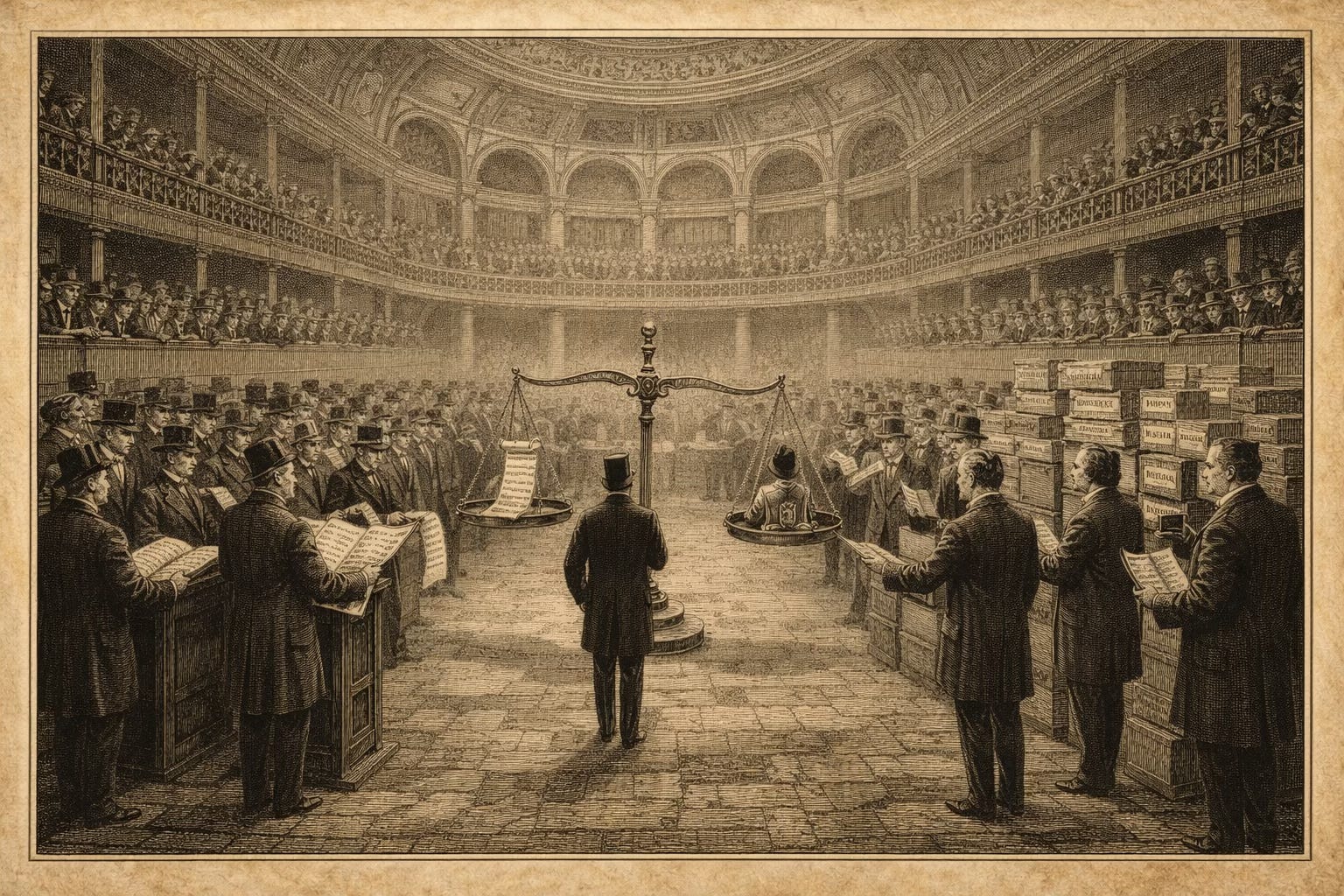
Paramount owns the library. Netflix owns the methodology.
What this means for capital allocators: behavioral data infrastructure is now a balance sheet item, not a line in the tech budget. Treat it that way. Ask every media borrower, every content buyer, every streaming operator, every catalog roll-up, the same question: what is your behavioral inference capacity relative to the scale of the library you are asking me to finance? The answer should include model generation, data freshness, panel size, signal granularity, and the honest integration horizon between your data systems and whatever asset is being bolted on.
Say the quiet part. The AOL-Time Warner deal in 2001 is the textbook version of this mistake at the largest possible scale. AOL paid $164 billion in stock for Time Warner during the last breath of the dial-up era. The audience relationship AOL thought it was contributing to the combined company was already migrating to broadband, to portals it did not own, and to the nascent social web. The combined entity wrote down $99 billion in 2002 alone. The library did not fail. The library never fails. The behavioral relationship AOL brought to the deal evaporated, and the math stopped working. Every media M&A analyst of a certain age can recite those numbers cold. Apparently, the lesson needed another 25 years to register.
If the answer is a gesture at “we have Nielsen and some internal dashboards,” price the deal accordingly. If the answer is 30 years of first-party behavioral signal tied directly to the asset being financed, then the price will be adjusted accordingly. The spread between those two answers is the new credit spread in media.
AQS exists as a methodology because the gap is real. Netflix built its own proprietary version. The credit market needs a cross-borrower version because not everyone will build their own from scratch, and those who do may not finish before 2036.
The Market’s Day Trade
Netflix reported first-quarter earnings on Thursday, April 16, the same day Hastings’s resignation letter went out. The company beat on both revenue and earnings. The stock still sold off more than 9% in pre-market trading because second-quarter guidance came in below the sell-side’s consensus. The shares had run more than 40% off the late-February low that preceded the WBD walkaway. The market treated the Q2 print as a signal that the rally had gotten ahead of the fundamentals.
That reaction is not the thesis of this piece. Quarterly guidance runs on a different clock than 30-year infrastructure. The two are priced by different buyers.
Look at what the market is actually pricing. Netflix has moved the ad-free standard plan to $19.99 a month, the premium plan to $26.99, and left the ad-supported tier at $8.99, the lowest ad-tier price among the major streamers. Robert Fishman at MoffettNathanson described the strategy as pushing price on the top end while capturing trade-down behavior into the ad tier. Antenna put Netflix’s U.S. cancellation rate at 1.7% in February, an industry low.
That is the behavioral machine speaking in pricing. An operator who did not know its cohorts would have no idea how much price each cohort would absorb before it quit. Netflix does know, because the machine told them. A 1.7% cancellation rate at materially higher price points is underwriting.
Netflix has guided to roughly double its ad revenue this year, from about $1.5 billion in 2025 to around $3 billion in 2026. MoffettNathanson projects $4.4 billion in 2027, $5.8 billion in 2028, and $7.3 billion in 2029. The company has said the ad tier reaches about 190 million viewers, with some share of those on shared accounts. Less than four years after launch, Netflix is on pace to become one of the 20 largest ad sellers outside China this year, per Luke Stillman at Madison & Wall.
The volatility sits in the guidance. The asset sits in the infrastructure.
The bearish read writes itself from here. The rally had priced perfection. Q2 guidance did not clear perfection. The stock backs off until expectations re-anchor. None of that rewrites the asset. The sell-off is a day trade. The infrastructure is a 30-year compounding position.
If Paramount misses Q2 guidance after closing WBD, nobody will be surprised. If Paramount misses Q2 guidance because its behavioral integration is months old rather than years old, the miss will compound. The market will eventually price the difference.
The Closing Questions
Paramount will finish integrating WBD. The press release will go out. The combined library will start showing up across the combined services at the combined price point. Six months in, the internal dashboards will begin to tell the real story: which franchises still command viewer habit, which catalog titles still earn their carrying cost, which prestige assets deliver completion rates that justify the licensing math.
That data already exists at Netflix. It will take Paramount years to develop its own version. In the interval, every renewal, every greenlight, every license decision, every churn-prevention play at Paramount runs on less information than the competitor they just outbid.
What does a content library cost when the owner cannot see what the audience is doing with it in real time?
What is the opportunity cost, per quarter, of making a $100 million greenlight call with Nielsen panels instead of with a 30-year first-party behavioral file?
What happens to the $110.9 billion purchase price on the day the combined company’s first full integration cycle closes, and the behavioral reports are ready to read?
And the question Reed Hastings answered with his resignation letter, whether the analyst class has noticed or not: what is the asset when the founder leaves, the machine keeps running, and the company turns down $82.7 billion because the machine told it to?
Paramount is about to find out what happens when you buy the largest content library in history without the infrastructure that prices it. Netflix already knows.
Why Subscribe
Because behavioral data just became a balance-sheet asset, and the credit market is going to spend the next decade learning how to price it. Attention Capital is where you watch that learning happen in real time, deal by deal, before it lands in the trade press.
If you work in finance, this is where you see capital learning to underwrite a new asset class. If you work in media or tech, this is where you understand what the market is actually pricing when your stock moves. If you are building something with an audience, this is how you watch institutional capital decides what your audience is worth.
For more on attention as an asset class, visit attncap.com. Institutional research now available.
Love your work. One point of clarification: It is not unusual for SEC filings to contain the line, the decision “is not the result of any disagreement with the Company.” In fact, not including it could raise eyebrows. Otherwise, great analysis as always.
So smart