



Welcome back to Attention Capital.
In February 1997, David Pullman walked into Prudential Insurance with a term sheet and a thesis. Fifty-five million dollars against the future royalty stream of 25 David Bowie albums released before 1990. A 7.9% coupon. A 10-year average life. The deal cleared, and the legend formed around it. Bowie got the cash, kept the catalog, and rewrote what kind of behavior could carry institutional debt.
What the legend leaves out is how much of the work was already done before Pullman picked up the phone.
ASCAP had been collecting performance royalties since 1914. BMI since 1939. SESAC since 1930. The Harry Fox Agency had been standardizing mechanical reporting since 1927. By 1996, every dollar of behavior inside Bowie’s catalog had been audited, normalized, and reported through institutional collection societies for generations. Pullman did the credit work. He did not build the documentation. The documentation already existed.
That is the part of the institutionalization story that keeps quiet. Capital does not create asset classes. Capital arrives when the pipes are built, and the cash flow is legible. Bowie Bonds priced in 1997 because the infrastructure underneath had been compounding for eighty-three years. The credit thesis fit through a hole that had already been cut.
We covered the playbook in The Playbook Already Built. Five layers, each one supporting the next. Music walked all five. Action sports, athletes, and creators have walked one or two and stopped. The deeper question that the piece left open is which layer matters most. Which layer is the gate?
The answer is the collection layer. The pipes. The standardized infrastructure that turns raw behavioral cash flow into auditable, comparable, structurable collateral. Music walked that layer over eight decades before the first bond closed. Attention-backed assets generate more documented cash flow than music ever did. They run through more granular reporting than ASCAP or BMI ever produced. What they do not have is the credit-side collection layer that converts platform analytics and agent reporting into rated-paper-ready collateral.
That gap is the entire piece.
For the Attention-Constrained
The structural rule. Asset classes institutionalize when the collection and reporting infrastructure precedes the capital. Capital recognizes legibility. Legibility comes from pipes that get built before the deal.
The music precedent. Eighty-three years of collection society build (ASCAP 1914, Harry Fox Agency 1927, SESAC 1930, BMI 1939) preceded the first institutional credit instrument against music royalties (Bowie Bonds, 1997). The Pullman deal was a recognition event. The construction took most of the 20th century.
The five layers. Documented cash flow → standardized collection → rating framework → specialist funds → PE entry. Music walked all five. Each layer depends on the prior. Removing the collection layer collapses the stack.
What attention has. Cash flow spans athlete contracts, creator platform revenue, library catalogs, and brand-owned audiences. The data exists at a granularity music has never achieved. YouTube Analytics, Spotify for Artists, TikTok Analytics, agency reporting through CAA, Klutch, and Wasserman, and public company disclosures on the counterparty side. Layer one is in place across every attention-backed vertical.
What attention doesn’t have. The standardized credit-side collection layer. Athlete cash flow runs through agencies on a quarterly cadence, but the audit framework is bilateral. The creator economy runs through platform analytics, where the platform is the counterparty, not a neutral intermediary. The pipes for monetization exist. The pipes for credit underwriting do not.
The methodology layer. The credit-side audit framework that converts platform analytics, agent reporting, and contracted commercial cash flow into rated-paper-ready collateral is the missing piece. It is structuring work, not building work. It has to happen before the asset class scales.
The franchise. Whoever builds the methodology layer first becomes the standardization franchise for the category. FICO did that for consumer credit. Moody’s did it for corporate. Bloomberg did it for fixed-income data. MSCI did it for equity indices. Each one built the legibility layer that everyone else’s capital now references.
The implication. Capital is ready. The cash flows are documented. The methodology is the gap. The next $50 billion of institutional credit deployment into attention-backed assets does not move until the credit-side collection layer is built and the rating framework references it.
The Infrastructure That Made Bowie Possible
The Bowie Bonds legend frames the deal as a credit innovation. It was a credit recognition.
Oh

The architecture that let Pullman price $55 million of senior paper against a singer’s back catalog had been assembled by the music industry over the prior eighty-three years, mostly by entities that had nothing to do with capital markets. Songwriters built ASCAP in 1914 because Victor Herbert sued a New York restaurant for playing his music without paying and won, and a group of composers organized to monetize what the courts had just ruled was monetizable. Broadcasters built BMI in 1939 because ASCAP held a monopoly, and the radio industry needed an alternative collection society to negotiate with. The Harry Fox Agency was formed in 1927 as the mechanical licensing arm of the music publishers’ trade association. Each entity arrived as a response to a fight over a specific cash flow. None of them got built with the credit market in mind.
What they built, layer by layer, was a system that audited and normalized behavioral cash flow.
ASCAP and BMI counted performances. Their collection methodology was crude at first, blanket-licensed and survey-sampled, and over the decades the methodology refined into systems that captured most of the public performance activity in the United States across radio, television, restaurants, bars, fitness clubs, retail spaces, and eventually digital service providers. The Harry Fox Agency handled mechanical licensing for compositions on physical and digital products, with its own audit framework and reporting cadence. SESAC ran a smaller competing performance society on a curated roster. SoundExchange was formed in 2003 specifically to collect digital performance royalties on sound recordings under the statutory licensing framework enacted in the Digital Millennium Copyright Act.
By 1996, when Pullman started shopping the Bowie structure, every dollar of behavior inside the catalog flowed through one or more of these institutions. The collection societies sent statements. The publishers sent statements. The labels sent statements. The accounting firms that audited Bowie’s catalog had eighty years of comparable cash flow data to benchmark against. The decay curves in his pre-1990 catalog were not guesses. They were a regression.
That is the part of the Bowie story the credit market should pay attention to. The deal was not the innovation. The deal was the proof that the infrastructure was ready.
The construction had taken decades. ASCAP took nearly three decades from its founding to stabilize the 1941 Department of Justice consent decree framework that still governs its collection. BMI took twenty years to build a competitive roster that mattered. The Harry Fox Agency took forty years to standardize mechanical reporting across formats. SoundExchange took the better part of a decade to negotiate the digital rate-setting frameworks that made streaming royalties auditable. Every collection society built audit standards before it built rate cards. Every rate card built referenced behavior before it referenced policy.
The structural pattern is the part to memorize. Institutionalization requires that the collection layer precede capital. The capital does not arrive until the cash flow is legible to a third-party auditor that the capital trusts. Music walked the eighty-three years. The cash flow became legible. The capital arrived. Every subsequent rated music ABS deal references back to the architecture that the collection societies built without ever intending to enable a credit market.
The same pattern shows up in every institutionalized cash-flow asset class. Mortgage securitization required the standardization of mortgage origination, servicing, reporting, and loan-level performance data that took the better part of three decades to build through Fannie Mae, Freddie Mac, and the Mortgage Bankers Association. Credit card ABS required the standardization of charge-off reporting, delinquency curves, and master trust accounting, which took a generation to achieve across Visa, MasterCard, and the issuing banks. Auto loan ABS required the loan-level reporting standards that captive finance companies had built over decades. Each asset class clears at credit-grade spreads only after the collection and reporting layer becomes institutional.
The order is fixed. The collection layer comes first. The capital follows.
That is the rule the next twenty years of attention-backed credit will get written against.
Pullman did the credit work. He did not build the documentation. The documentation already existed.
The Five Layers Music Walked

The architecture of an institutional cash-flow asset class has five distinct layers. Music walked all five. Each layer depends on the one underneath it. Removing any layer collapses the stack.
Layer one is documented behavioral cash flow. Music has compositions and recordings that earn performance royalties, mechanical royalties, sync fees, and digital streaming income across decades. The cash flow profile is well understood. Hits decay. Catalog stabilizes. Some songs become standards and enter the third generation. Music has been generating documented royalty income at scale since the player-piano era.
Layer two is standardized collection. Music routes its cash flow through ASCAP, BMI, SESAC, SoundExchange, the Harry Fox Agency, the publisher administrators, and the major label distribution chains, each with its own audit frameworks and reporting cadences. The collection layer is the bridge between the cash flow and the credit. It turns raw behavior into auditable line items. The institutionalization of music collection took the better part of the 20th century. By the time the first credit instrument was priced against the cash flow, the audit standards were industry standard, and the rating agencies trusted the data.
Layer three is the rating framework. Music has Moody’s, Fitch, and S&P templates for catalog ABS deals, refined across more than a decade of issuance, with comparable transactions priced on a consistent basis. The rating framework is what converts auditable cash flow into rated paper. It requires a structured methodology that the rating agency will publicly sign off on. The methodology took years to build out and required dozens of bilateral deals to refine. Once the framework cleared, every subsequent deal in the category priced off it.
Layer four is specialist funds. Music has Hipgnosis, Round Hill, Primary Wave, Concord, Kobalt, Reservoir, Spirit Music, and a long tail of catalog-focused vehicles that benchmark performance against published track records. The specialist funds aggregate the asset class and set the price discovery. They are the buyer base for the rated paper and the LP-side outlet for institutional capital seeking exposure to the cash flow. Without the specialist funds, every deal is bespoke. With them, the asset class trades.
Layer five is PE entry at the top of the credit stack. Music has Blackstone, Apollo, and KKR positioned at the equity-ownership and senior-credit layers across the major catalog vehicles. Blackstone took Hipgnosis Songs Fund private at $1.584 billion in July 2024. Recognition Music Group, the rebranded post-take-private vehicle, issued approximately $1.47 billion in rated music ABS in the back half of 2024 and a $372 million tranche rated A by both Fitch and S&P in July 2025. The PE layer validates the asset class for the institutional LP base and aligns ownership incentives with cash-flow durability.
The five layers compound. Layer one without layer two produces raw cash flow with no audit trail and no comparable. Layer two without layer three produces audited cash flow with no rating template and no senior-credit market. Layer three without layer four produces rated paper with no aggregate buyer base. Layer four without layer five produces specialist vehicles with no PE-side validation. Each layer requires the prior layer to be standardized before it can clear at scale.
The music industry walked layers one and two from roughly 1914 through 1996, eighty-two years of building the collection infrastructure that would later make the credit case possible. Layer three cleared between 1997 (Bowie Bonds) and roughly 2015, almost two decades of bilateral deals refining the rating-agency template. Layer four cleared between 2010 and 2020 with the rise of Hipgnosis, Round Hill, Primary Wave, Concord, and the rest of the specialist fund cohort. Layer five cleared between 2021 and 2024 with the entry of Blackstone, Apollo, and KKR at the top of the credit stack. Each layer took years. The full institutionalization arc took over a century.
The five-layer model is not unique to music. Mortgage securitization walked the same five. Credit card ABS walked the same five. Auto loan ABS walked the same five. Aircraft ABS walked the same five. Every durable cash-flow asset class walks that staircase in the same order. The capital is always last. The collection layer is always the gate.
That is the rule attention-backed credit will be priced against. The structural prediction is convergence to credit-grade spreads once all five layers are in place. The structural blocker is the second layer. Until the collection and audit infrastructure becomes institutional, the asset class clears at equity prices regardless of the underlying cash flow.
What Attention-Backed Assets Have
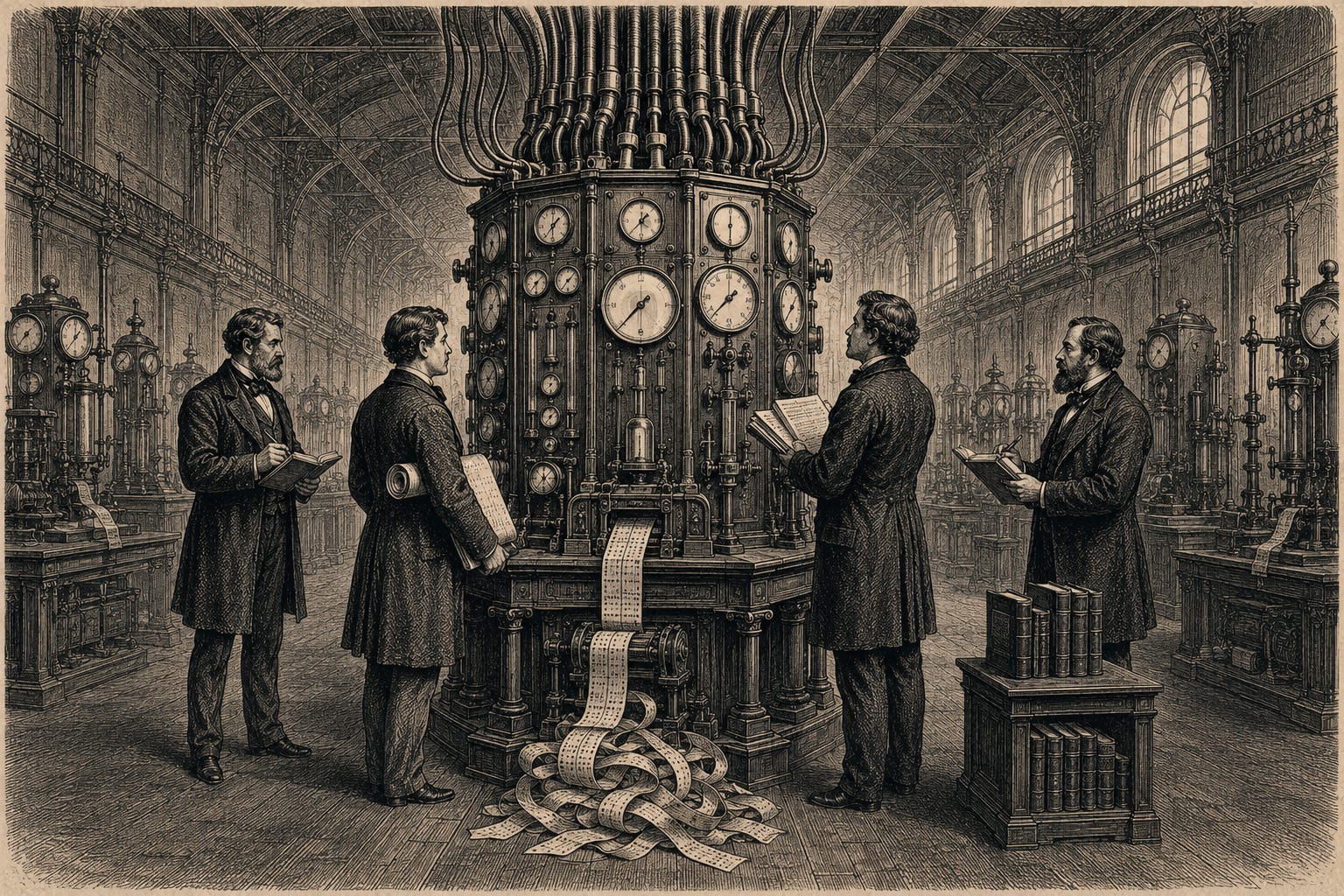
The cash flow under attention is documented. The data underneath the cash flow is granular. Layer one is in place across every attention-backed vertical, and in most cases, the documentation runs deeper than it did in the music industry in 1997.
Creator platform revenue is the most documented behavioral cash flow in the history of commercial entertainment. YouTube Analytics reports daily watch time, audience demographics, retention curves, traffic sources, geographic distribution, device mix, subscriber flow, and revenue per thousand views for every monetized channel. Spotify for Artists reports stream-by-stream attribution, listener cohorts, save rates, playlist placements, source-of-stream breakdowns, and country-level retention. TikTok Analytics reports view duration, completion rates, audience composition by interest cluster, repeat-viewer breakdowns, and creator fund payments. Twitch reports concurrent viewership, subscription cohorts, bits revenue, and stream-by-stream engagement. Patreon and Substack report subscriber-level lifetime value, retention curves, churn cohorts, and revenue concentration. Every platform produces cash flow and the data trail beneath it simultaneously, in code rather than on paper, with cryptographic audit logs rather than survey samples.
Athlete commercial cash flow runs through the major sports agencies on documented quarterly cadences. CAA Sports, WME Sports, Roc Nation Sports, Klutch Sports Group, Athletes First, Wasserman, and Excel Sports Management each represent athletes whose commercial books include endorsement contracts, broadcasting agreements, equity grants, licensing income, and appearance fees. The contracts and the reporting frameworks are bilateral and confidential. The reporting cadence and the audit chain are institutional. Public company disclosures on the counterparty side anchor the income lines against audited corporate balance sheets. The Fox Corporation’s 10-year, $375 million Brady contract sits inside Fox’s publicly reported sports rights commitments. Nike’s lifetime LeBron James agreement, signed in 2015, is reflected in Nike’s audited consumer financials. The duration profile runs from three years on most endorsement deals to ten years on the longest broadcasting agreements. The behavioral durability of each athlete’s commercial reach has been measured by every brand that contracts with them, using internal mix modeling and brand-lift data that the brands themselves regard as proprietary.
Library catalogs across kids’ IP, animation, scripted, and unscripted formats run on cohort retention data more legible than music catalog retention was in 1997. Moonbug’s Cocomelon, Blippi, and Little Baby Bum portfolio generates revenue across YouTube, Netflix, Disney+, Amazon, Apple TV+, the Moonbug Kids app, and a global licensing program in toys and apparel. Each platform reports its own viewership, retention, and revenue numbers. The aggregate cash flow per minute of content has been benchmarked across the kids’ segment by every buyer that has run a comparable deal. Hello Sunshine’s slate runs on similar cross-platform reporting. The catalog held by SpringHill, by Westbrook, and by the other athlete-led production companies runs on the same infrastructure.
The brand-as-media cash flow flows through audited corporate financials. Nike, Apple, Tesla, Patagonia, LEGO, Liquid Death, Glossier, and the rest of the brand-as-media cohort each report the revenue, the margin, and the audience-engagement data on their owned channels through their public-company filings or their private operating reports. The cash flow is real. The audit chain is the same audit chain that supports corporate credit ratings on the parent companies.
Layer one is not the gap. Layer one is in better shape across attention-backed assets than it was in music in 1997. The cash flow is documented at higher granularity, faster cadence, and tighter audit chain than the collection-society era ever achieved.
The granularity point bears emphasis. ASCAP and BMI built their collection methodology on blanket licensing and survey sampling because the underlying media (radio, broadcast television, public-performance venues) could not be metered at the per-listener level. The collection societies inferred behavior from samples. They priced the blanket license against the inference. The audit chain ran through the surveys and the consent-decree framework. The granularity was good enough to support a credit market by the 1990s, but it was never close to per-listener metering.
YouTube Analytics meters every view. Spotify for Artists meters every stream. TikTok meters every completion rate. The granularity gap between the music collection layer in 1996 and the attention platform layer in 2026 is several orders of magnitude. The audit chain on the platform side is also stronger because the data lives in code and the platforms are subject to advertiser-driven audit standards (MRC accreditation, IAB measurement standards, third-party ad-verification) that the music industry never had.
The documentation problem is solved. The granularity problem is solved. The cadence problem is solved.
Layer one is in place.
What Attention-Backed Assets Don’t Have

What is missing is the credit-side collection layer.
Music has SoundExchange, the publisher administrators, the Harry Fox Agency, and a century of refined consent-decree audit standards. The collection layer is institutional. The rating agencies trust it. The rated ABS market references it. The data flows through one of a small number of trusted intermediaries, each with audit standards documented in their consent decrees or their commercial agreements, each with a published methodology for normalizing the cash flow across the asset class.
Attention-backed assets do not have that intermediary.
Creator audience cash flow runs through the platforms themselves. YouTube reports the data to the creator. Spotify reports it to the artist. TikTok reports it to the talent. The creator, the artist, and the talent then report selectively to their MCNs, talent management firms, business managers, and accountants. The aggregator layer is fragmented across Spotter, Jellysmack, Whalar, Influential, and a long tail of creator-side service providers, none of which hold the position the collection societies hold in music. The platforms themselves are not neutral intermediaries. They are counterparties to the creator. They have an incentive to report in ways that protect the platform’s margin position. A rating agency cannot rely on the counterparty to audit the counterparty’s own cash flow.
That is the structural defect of the current creator collection layer. The cash flow data is granular. The audit framework is not credit-grade. No third-party intermediary stands between the creator and the platform with the position and the audit standards to validate the cash flow for an institutional credit instrument. The data is there. The pipes are not organized for credit underwriting.
Athlete commercial cash flow has the opposite defect. The agencies on the athlete side are neutral intermediaries by design (the agent works for the athlete, not the counterparty), but their reporting cadence and audit standards are not institutional. CAA Sports does not publish a methodology. Klutch Sports Group does not have a consent decree. Wasserman does not run an audit framework that a Moody’s analyst can pull. The reporting that flows from the agencies to the athletes is bilateral and confidential, varying in shape and depth from agency to agency and from athlete to athlete. There is no rated-paper-ready collection layer.
The cash flow is real. The audit chain is bilateral. The credit-side intermediary does not exist.
Library catalog cash flow runs through the platforms and the licensors on a deal-by-deal basis. Moonbug’s revenue from YouTube comes through the YouTube partner program. Its revenue from Netflix comes through a Netflix licensing agreement. Its revenue from toys and apparel comes through UTA’s North American licensing representation and brand-partner agreements with merchandise licensees like JAKKS Pacific. Each revenue stream has its own audit framework, its own reporting cadence, and its own counterparty. The library owner has to assemble the picture across multiple intermediaries, none of which is positioned to act as the neutral aggregator the credit market would need. The same is true for Hello Sunshine, SpringHill, and every other library catalog inside the attention asset class.
The brand-as-media cohort runs its cash flow through corporate financials, which is the cleanest of the four sub-categories. Nike, Apple, and Tesla each report consolidated revenue through SEC filings audited by Big Four accounting firms. The audit chain is institutional, and the credit market already underwrites the parent-company corporate paper at investment-grade spreads. The problem on the brand side is segmentation. The audience engagement and direct-channel cash flow within the parent company are not broken out at the line-item level; the rated ABS market would need to price the attention-asset tranche separately from the corporate paper. The brand-side credit case is structurally simpler but operationally more constrained.
Across all four sub-categories, the structural answer is the same. The collection layer that exists on the monetization side does not translate cleanly into credit-side collateral. The pipes are organized by platform, agent, licensor, and brand. The pipes are not organized for the credit underwriter.
The work that is missing is structuring, not building. The cash flow data exists. The audit chains exist. The intermediaries exist. What does not exist is the credit-side methodology that converts the platform analytics, the agent reporting, the licensor statements, and the brand financial disclosures into rated-paper-ready collateral a rating agency will sign off on publicly, and a senior-tranche buyer will price tight to comparable corporate paper.
Music built its collection layer across eighty-three years because the underlying media required physical metering and the audit standards required regulatory frameworks (consent decrees, statutory licenses, DMCA implementation) that took generations to settle. The attention-backed asset class does not require eighty-three more years. The data is already in code. The audit standards already exist on the advertiser-driven measurement side. The intermediaries already exist on the agency, MCN, licensor, and corporate-financial sides. What is missing is the credit-side audit framework that pulls the pieces together and applies a consistent methodology across the cash flow.
The methodology is the bridge. Whoever builds it first becomes the standardization layer for the category.
The cash flow data is granular. The audit framework is not credit-grade. That is the gap.
The Methodology as the Bridge
The credit-side audit framework that converts platform analytics, agent reporting, library licensor statements, and brand financial disclosures into rated-paper-ready collateral is the load-bearing innovation in attention-backed credit. Everything else in the stack already exists. The methodology is the gate.
Attention Capital is building that methodology under the name the Attention Quality Score, or AQS. A multi-pillar input framework. A tiered output that maps to credit-rating notation. A filed patent portfolio. The scoring engine compounds privately. The standard compounds publicly. What gets published is the methodology’s architecture, the rationale for the framework, and demonstration cases that show the methodology produces consistent results across borrowers.
The construction of the methodology mirrors the construction of every prior scoring infrastructure that became the standardization layer for an asset class.

Fair Isaac Corporation did this for consumer credit beginning in 1956 when the firm developed the first scoring algorithm against bilateral consumer credit data. FICO did not have the consumer cash flow itself. The credit card issuers, the auto lenders, and the mortgage originators did. What FICO had was the methodology that converted bilateral consumer data into a comparable score that every issuer, every lender, and eventually every regulator could reference. The methodology became the layer through which everyone else’s capital ran. The asset class scaled with the score.
Moody’s began doing this for corporate credit in 1909, when John Moody published the first bond rating manual. Moody’s did not own the corporate cash flow. The corporations did. What Moody’s had was the rating methodology that converted bilateral corporate financial data into a comparable letter grade that every bondholder, every underwriter, and eventually every regulator could reference. The methodology became the layer through which everyone else’s capital ran. The bond market scaled on the back of the rating.
Bloomberg did this for fixed-income data beginning in 1981. The cash flow underneath the bonds belonged to the issuers. What Bloomberg owned was the methodology and the terminal that converted bilateral pricing and reference data into a comparable platform that every trader, every PM, and eventually every regulator referenced. The methodology became the data layer against which the entire fixed-income market clears.
MSCI did this for equity benchmarks beginning in 1968 inside Capital International, spun out of Morgan Stanley in 1998, and listed in 2007. The equities belonged to the issuers. What MSCI owned was the index methodology that turned a universe of bilateral securities into a benchmark every institutional portfolio measures against.
Visa did the same thing for payments, starting from the BankAmericard program, which Bank of America launched in 1958. Visa does not issue the card. Visa does not extend the credit. Visa owns the standardized switching network and the methodology that clears every transaction across thousands of issuers and millions of merchants. Every swipe at every terminal references the standard. The methodology owner sits at the toll booth on every transaction, priced at a multiple that no bank issuing a Visa card has ever cleared.
The pattern is consistent. The franchise belongs to the methodology owner, not the cash-flow owner. The cash-flow owner is bilateral and varies across borrowers. The methodology owner is universal and standardizes the comparison. The capital prices off the standardization.
The methodology for attention-backed credit has the same shape. A multi-pillar input framework that captures the dimensions of attention quality that matter for credit underwriting. A tiered output mapped to credit-rating notation. A patent portfolio that protects the methodology against being copied by every credit desk that wants the franchise without doing the work. The methodology does not own the cash flow. The cash flow belongs to the creator, the athlete, the licensor, and the brand. The methodology owns the standardization that turns the cash flow into legible credit collateral.
That is the architecture every prior standardization layer has used. FICO did not own the consumer. Moody’s did not own the corporation. Bloomberg did not own the bond. MSCI did not own the equity. Visa does not own the card or the merchant. The methodology owners own the conversion layer.
The franchise economics on the methodology layer compound for a defined reason. Every issuer in the category eventually references the methodology because the rated ABS market requires the reference. Every buyer in the category eventually references the methodology because the senior tranche allocation requires the reference. Every rating agency in the category eventually references the methodology because the rating-agency template requires a third-party methodology to anchor the analysis. The methodology becomes the protocol. The protocol becomes the toll booth.
The toll-booth economics work the same way they did for FICO. Fair Isaac collects licensing revenue on every issuer that references the FICO score across consumer credit, auto lending, and mortgage origination. The methodology layer captures a basis-point-equivalent fee on every dollar of credit, priced against the standard. The fee aggregates into a market capitalization that dwarfs the balance-sheet lenders whose loans the FICO score underwrites. The methodology owner became more valuable than most of the issuers that reference the methodology.
Moody’s runs the same model on corporate credit. S&P Global runs the same model across corporate credit, equity indices, and commodities. MSCI runs the same model on equity benchmarks. Visa runs the same model on payments. Verisk runs the same model on insurance underwriting data. Each one is a methodology business, not an underwriting business. Each one prices at multiples of book value that no balance-sheet lender ever clears.
That is the prize on the attention-backed credit side. The first credit desk that prints a senior secured deal against attention collateral does well. The desk captures the structuring fee, the relationship with the borrower, and the standing to print the next deal in the category. The methodology owner the deal references does better. Every subsequent deal in the category, regardless of which credit desk structures it, prices off the same methodology. The methodology owner collects on every deal.
The methodology must be in place before the first rated deal closes. The rating agency will not issue a public letter against the bilateral methodology that exists only inside a credit desk’s own files. The methodology has to be published, defensible against external challenge, and (in the modern era) protected by patent claims that prevent a competing desk from cloning it. That is the work Attention Capital is doing. The scoring engine compounds privately. The standard compounds publicly.
The structural prediction is that the first methodology that clears against the first-rated deal becomes the FICO of attention-backed credit for the next twenty years. Every subsequent deal in the category references the methodology. Every specialist fund prices off the methodology. Every PE buyer at the top of the credit stack assumes the methodology is the standard. The methodology owner captures the licensing economics on every deal in the category for as long as the methodology holds the franchise.
The capital is ready. The cash flows are documented. The methodology is the gap.
The franchise belongs to the methodology owner. The cash-flow owner is bilateral. The methodology owner is universal.
The Methodology Is the Moat
Capital follows infrastructure. The infrastructure that gates attention-backed credit is the collection and scoring layer. The operator that builds it first owns the standardization franchise. Every layer above it (the rating template, the specialist fund, and the PE entry at the top of the credit stack) references the underlying methodology layer. The franchise consolidates around whoever owns the standardization.
The economics of standardization franchises are public record. Fair Isaac trades at a multiple of consumer-credit balance-sheet lenders. Moody’s trades at a multiple of corporate-credit underwriters. Bloomberg, although private, is valued at a multiple of fixed-income brokerages. MSCI trades at a multiple of equity-index issuers. Visa trades at a multiple of every bank that issues a Visa card. The methodology owner outperforms the cash-flow owner because the methodology owner sits at the toll booth that every cash-flow owner has to clear.

The cash-flow owners in attention-backed credit are real and growing. The creator platforms, the athlete commercial books, the library catalogs, and the brand-as-media cohorts each produce cash flow that runs into the tens of billions across documented annual income. The credit market that will eventually price that cash flow will be larger than the music ABS market. The methodology owner that holds the standardization franchise for that market captures a position that compounds across the asset class for as long as the standardization remains in place.
The history of every prior standardization franchise repeats the same structural arc. The methodology was built before the capital arrived. The methodology was protected by patent, by trademark, by network effect, or by some combination of all three. The methodology was published at the architecture level and held proprietary at the engine level. The franchise lasted as long as the methodology remained credible, and the patent moat remained defensible.
That is the framework Attention Capital is building. The Attention Quality Score is the methodology. The patent portfolio is filed. The first-rated deal will reference the methodology, and every subsequent deal will reference back to the first.
The pipes are not built yet. The methodology that closes the gap owns the franchise.
Why Subscribe
Because attention is the next great asset class, and the credit market is just starting to underwrite it correctly.
Every week, Attention Capital reads the deals other publications miss, applies a behavioral attention-scoring framework to assets that should be financeable, and draws the curves the sell side has not yet drawn. Music ABS was the precedent. Sports rights are the first sector to clear at scale. Athlete commercial paper is next. Action sports brand credit is next. Creator audience ABS is next. Each piece builds on the last.
If you work in finance, this is where you see where the next $50 billion of institutional credit deployment lands before the term sheets are written. If you work in media or athletics, this is where you see how capital is starting to price the asset you have been building. If you allocate to private credit, this is the playbook for asset classes that do not yet have a desk and for the methodology layer that gates institutional capital.
For more on attention as an asset class, visit attncap.com. Institutional research now available.
Here's the detail I couldn't fit in the piece. Every one of those collection societies was born in a fight. ASCAP exists because composers sued a restaurant and won. BMI exists because broadcasters wanted a weapon against ASCAP's monopoly. Harry Fox was the publishers protecting themselves from everybody else. Nobody was trying to build a credit market, man, they were fighting over nickels, and the audit standards were the ammunition. Then eighty years later Prudential trusted the paperwork for exactly that reason. Every number had already survived somebody's lawyer. Same thing's happening in attention right now: platform analytics got rigorous because advertisers refused to pay for impressions nobody could verify. The fights build the pipes.