

The Playbook Already Built
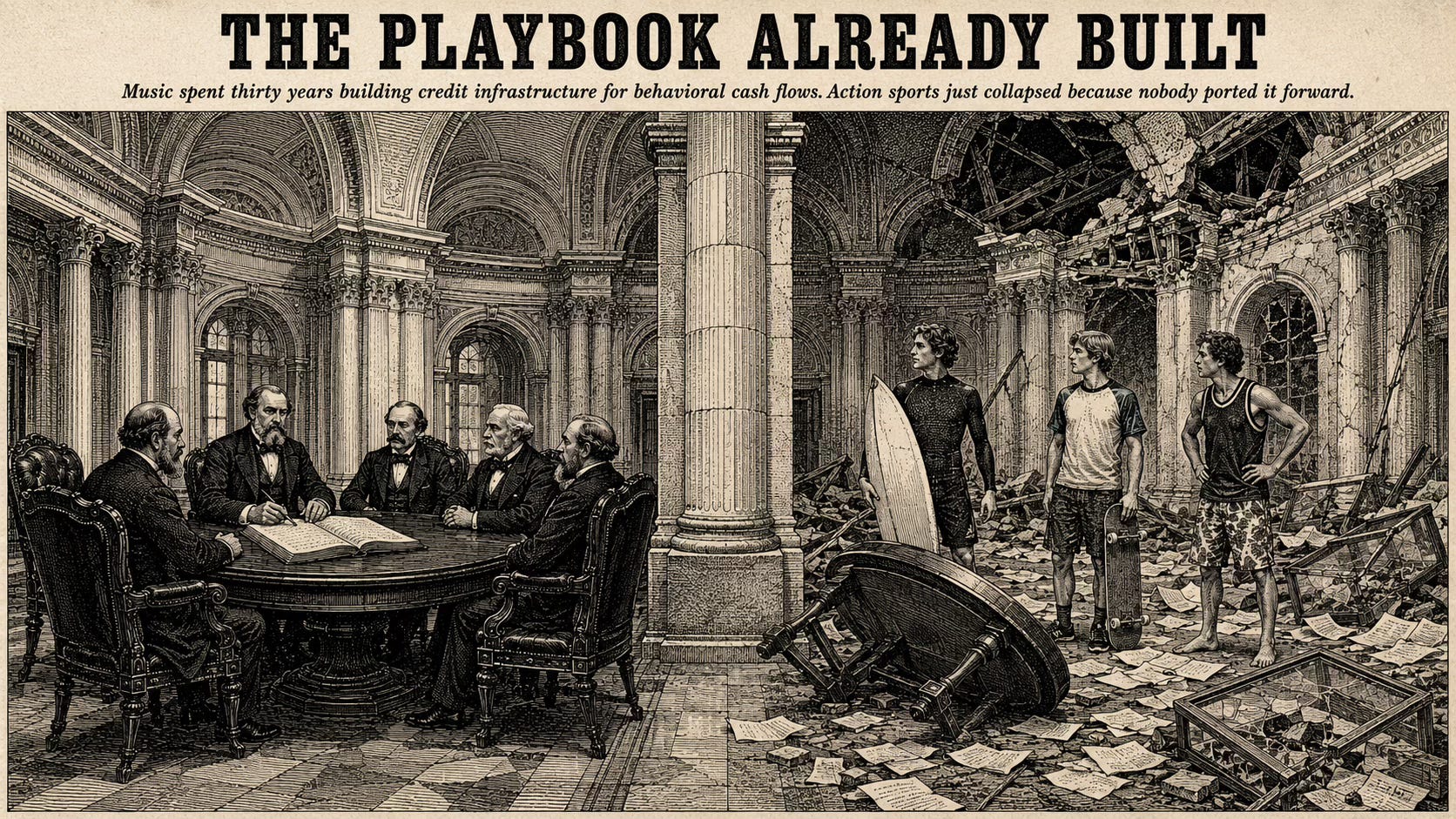
Music spent thirty years building credit infrastructure for behavioral cash flows. Action sports just collapsed because nobody ported it forward.

Welcome back to Attention Capital.
Sometime in the fall of 2024, on a credit committee call inside one of the larger asset-backed finance shops, a deal got priced. Recognition Music Group was issuing approximately $1.47 billion in rated music ABS paper, secured against the catalogs Hipgnosis Songs Fund had assembled and Blackstone had taken private a few months earlier. Fitch and S&P had templates ready. The decay curves for the underlying songs span decades. Cohort retention at the catalog level is priced like an annuity book. The committee approved the allocation and moved on.
Two months later, the same desk’s morning headlines flagged a Chapter 11 filing in Delaware. Liberated Brands, the operating licensee for Volcom, Billabong, Quiksilver, RVCA, Roxy, Spyder, and Honolua, filed for bankruptcy on February 3, 2025, with roughly $226 million in debt. About 1,400 employees lost their jobs. Roughly 124 stores went dark. Authentic Brands Group, which owns the trademarks on every one of those labels, kept the IP. The athletes who built the cultural equity inside those brands took the loss. Kelia Moniz, two-time WSL world longboard champion, described her renewal offer from Roxy as roughly a 90% pay cut after 17 years on the team.
Nobody on the music ABS call ever touched the action sports deal. There was no deal to touch. No senior secured paper exists against athlete commercial cash flow at the institutional scale music has reached. No rated framework prices brand IP whose underlying value lies in the people within the contracts. The credit shop that approved the catalog at investment-grade has the playbook to underwrite the action sports business at the same grade. The playbook hasn’t been ported yet.
That gap is the entire piece.
Music spent thirty years building the credit infrastructure for behavioral cash flow. The collection societies. The royalty pipes. The rated ABS template. The specialist funds. The PE buyers at the top of the stack. Each layer compounds the next.
Action sports brands generate documented athlete commercial cash flow. Athlete businesses produce contracted endorsement and broadcasting income that runs decades. The creator economy has platform analytics more granular than music collection has ever been. The architecture maps. The first desk that ports it owns the next twenty years.
For the Attention-Constrained
The asset class: Music catalog credit is the only behavioral-cash-flow asset class that has been fully institutionalized. Bowie Bonds in 1997 to Blackstone’s $1.584 billion take-private of Hipgnosis Songs Fund in July 2024. Recognition Music Group’s $1.47B rated ABS in late 2024 and $372M ABS rated A by Fitch and S&P in July 2025. The architecture has cleared institutional scale.
The structural read: Three adjacent asset classes share the same cash-flow profile but lack credit infrastructure. Action sports brands run on athlete commercial cash flow. Athlete businesses run on contracted endorsement and broadcasting income. Creator economy IP runs on platform-reported audience cohorts. Each one is more documented than music catalogs were in 1997.
The case anatomy: Liberated Brands collapsed at $226M in debt because buyout equity priced for IRR has one job, and that job is incompatible with the athletes who carry the brand. Senior secured paper with an athlete-retention covenant would have inverted the incentive. The brand survives. The athletes stay. The cash flow holds.
The athlete venture stack: Maverick Carter’s SpringHill sold a minority stake to RedBird, Nike, Epic Games, and Fenway Sports Group in October 2021 at a valuation of $ 725M. Tom Brady signed a 10-year, $375M broadcasting deal with Fox in 2024. Patrick Mahomes runs an investment portfolio through 2PM Ventures. Every one of these is happening in equity because no rated ABS template exists for athlete commercial cash flow.
The creator distress cycle: Spotter committed to deploying $1B against YouTube creator catalogs after SoftBank-led Series D at $1.7B in February 2022. That facility is the proto-architecture. It is not yet a rated ABS. It is where music sat in the early 1990s.
The implication: The credit-infrastructure work has already been done in music. The cash flows on the other side are already documented. The first desk that ports the playbook captures the structuring fees, the benchmarking authority, and the rating-agency relationships for the next decade.
The Playbook
Music finance did not arrive in 1997 with David Bowie. The Bowie deal was the first visible institutional credit instrument issued against song royalties, and it gets the historical credit, but the infrastructure underlying it had been compounding for 83 years before the first bond closed.
ASCAP launched in 1914. BMI in 1939. SESAC in 1930. SoundExchange in 2003. The mechanical and sync royalty pipes that flow through the Harry Fox Agency, the publisher administrators, and the digital service provider settlement architecture took most of the 20th century to build. By the time David Pullman walked into Prudential’s offices in 1996 with a term sheet for the Bowie catalog, the cash flows had already been audited, normalized, and reported through institutional collection societies for two generations. The credit work was identifying the asset class, not building the documentation. The documentation was already there.
Bowie Bonds priced at $55 million on a 7.9% coupon with a 10-year average life, bought by Prudential Insurance in February 1997 through Pullman’s group at Fahnestock & Co. The deal was small. The architecture was the point. Pullman’s structure said that an artist’s catalog produced documented behavioral cash flow that institutional capital could buy at a tight spread to comparable corporate paper. From that template, every subsequent music ABS deal flowed.
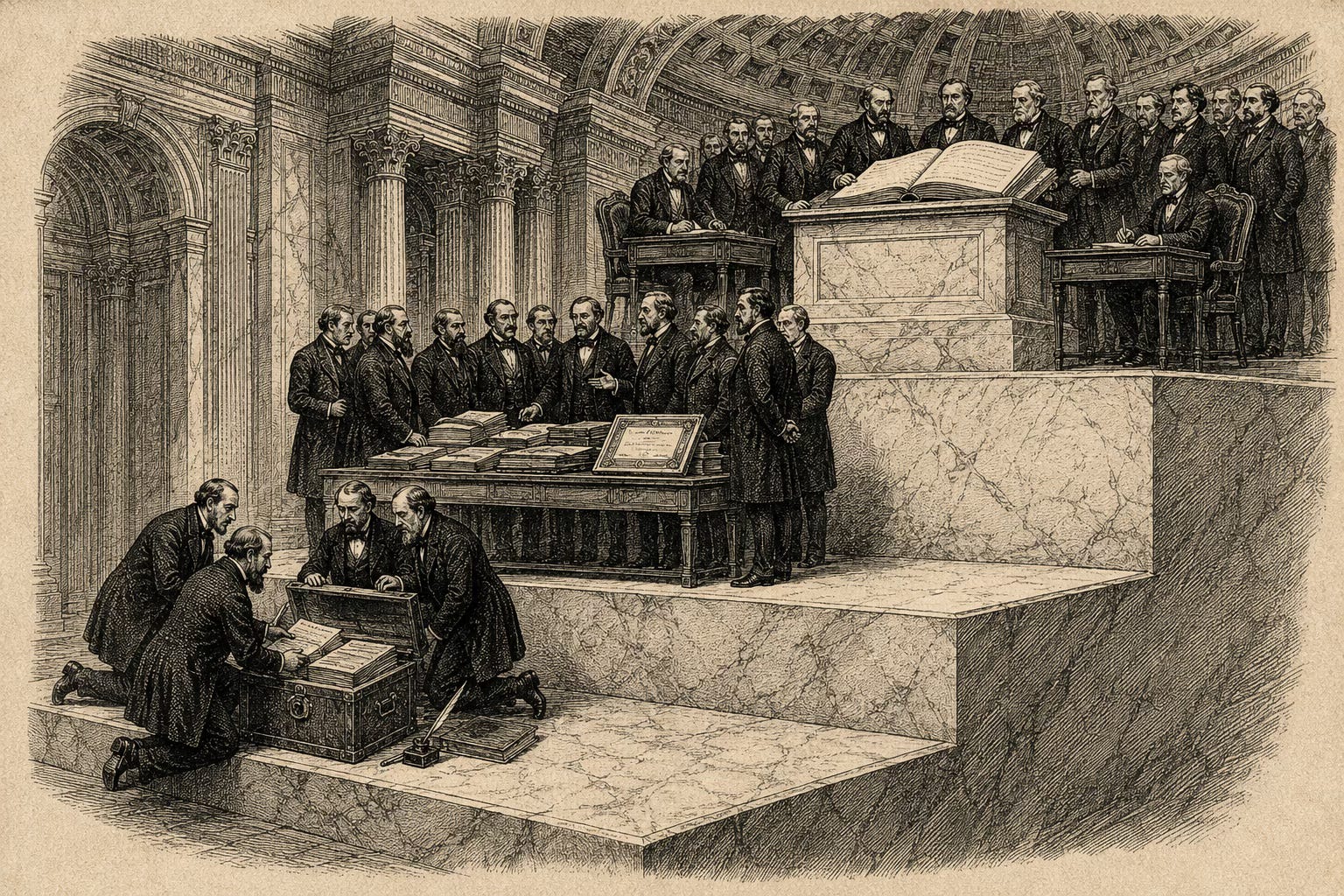
The institutionalization happened in three waves. The first wave, through the late 1990s and 2000s, was royalty-secured asset-backed lending at the catalog and publisher level, pioneered by specialist credit shops and bank loan syndicates. Mostly private, mostly bilateral, mostly priced bespoke. Pullman closed several follow-on royalty-backed deals after Bowie. SunTrust, Nomura, and Royal Bank of Scotland built royalty-secured lending books. The Harry Fox Agency standardized mechanical reporting through that same window. The Music Reports system tracked usage data through the launch of the digital service providers in the early 2000s.
The second wave, from 2010 through 2020, brought specialist funds into the asset class: Round Hill, Primary Wave, Concord, Kobalt, Reservoir Media, Spirit Music, and the public-listed Hipgnosis Songs Fund, which IPO’d on the London Stock Exchange in July 2018 at £202 million. The funds aggregated catalogs, ran professional administration, and reported performance against a consistent set of benchmarks. The benchmarks themselves became tradable. A catalog with documented retention curves over 36 to 60 months priced consistently across buyers. Kobalt’s NEM platform set standards for transparent reporting that flowed back into the credit case for the underlying paper.
The third wave, beginning in 2021, was the rated ABS market and the PE entry at the top of the credit stack.
Blackstone partnered with Hipgnosis Song Management on a $1 billion catalog acquisition vehicle in October 2021. KKR and BMG cut similar partnerships. Apollo backed Concord. The PE shops priced their entry on the assumption that the underlying cash flow could be securitized and distributed at investment-grade spreads, and the rating agencies validated the assumption. Concord’s catalog ABS deals in 2022 and 2023 cleared at A-flat ratings with low-coupon long-dated paper. KKR-Chord Music’s 2022 catalog ABS cleared at the same level. The market priced behavioral cash flow against documented decay curves and got comfortable.
By 2023, the rated music ABS market was self-sustaining. New issuances priced against established comps. Spreads compressed as the buyer base widened. Insurance company general accounts, pension fund credit allocations, and BDC specialty finance books all opened up to the asset class. The 144A market handled the placement. The investment-grade tranches were priced at levels comparable to those of corporate bonds issued by similarly sized issuers. The rating agencies refined their methodology with each successive deal. The auditors built playbooks for verifying catalog cash flow that became standard across the buyer base. The structural work was done. The market mechanics took over.
The Hipgnosis story turned messy in 2023 and 2024 when the public vehicle’s NAV came under shareholder pressure, the manager and the fund publicly disagreed over portfolio valuation, and a takeover battle pitted Blackstone and Concord against each other in opposing bids. Blackstone won the take-private at $1.584 billion in July 2024, at $1.30 per share, with Concord topping out at $1.25 per share. Merck Mercuriadis, the founder and chairman who had built the public vehicle, stepped down as CEO in February 2024 and exited the chair role at the closing. The combined entity rebranded to Recognition Music Group in March 2025.
That sequence is the proof that the asset class is real. One operator overpaid at the public-vehicle stage. The market disciplined the equity. The credit on the underlying catalogs held. Recognition issued $1.47 billion in rated ABS paper in the back half of 2024, then a $372 million tranche in July 2025, rated A by both Fitch and S&P. The architecture survived the operator failure. That is the test of an institutional asset class.
Operators come and go. The credit on the cash flow holds.
The pattern matters because it is the pattern that every adjacent asset class must clear before it earns the same credit treatment. Documented cash flow with auditable collection. Standardized reporting through neutral intermediaries. A rating-agency template for converting that cash flow into senior debt. Specialist funds that benchmark the asset class against their own track records. PE buyers at the top of the credit stack who need the rated paper to fund their acquisitions. Each step depends on the prior. Music walked all five.
The other three asset classes covered in this piece have walked one or two of them. None has walked the full five. That gap is the opportunity.
The Action Sports Collapse
Liberated Brands is the cleanest documentation of what happens when the operating capital structure does not match the asset.
The company held the operating license for the Boardriders portfolio, which it acquired from a 2023 transaction with Authentic Brands Group. ABG owned the trademarks. Liberated ran the wholesale, retail, and licensing operations under license. The license structure isolated the brand IP from operating cash flow, allowing buyout equity at the operating layer to take a margin without affecting the brand owner. ABG kept the trademarks regardless of how Liberated performed. Liberated had every incentive to extract margin and no covenant pressure to protect the cultural equity inside the brands. The athletes were the cultural equity.
Liberated cut the Volcom team over the course of 2024. Roxy cut Kelia Moniz, the two-time WSL world longboard champion who had been on the team for 17 years, with what she publicly described as a 90% pay cut on her renewal offer. Tony Hawk’s apparel deal with Vans had run on a different structure, but the timing of his pull-back from action sports apparel partnerships in the same window underlined the same point. The athletes who carried the brands’ cultural equity were either getting cut, getting low-balled, or walking. The downstream consumer signal followed. Engagement on the sponsoring brands fell across multiple metrics. Sales fell faster.
By February 2025, the company filed for Chapter 11. ABG had terminated the Volcom, RVCA, and Billabong North American licenses in December 2024 in advance of the filing. The trademarks moved to a new licensee. The athletes were already gone. The audience that knew the brands through the athletes had already started to disengage. The brand survived legally. The cultural equity that had driven margins had been stripped out by then.
The structural read is that the operating capital structure created the strip incentive, and the license structure isolated the brand owner from the consequence. Buyout equity at the operating layer, priced for IRR with a typical three to five-year hold, has one job. Margin extraction. The athletes are the highest variable cost on the marketing side and the most visible on the cultural side. Cutting them releases margin in the current year. Brand erosion shows up in subsequent years after the equity has exited and the next operator has taken over the license. Every part of that structure pushes the operator toward stripping the athletes.
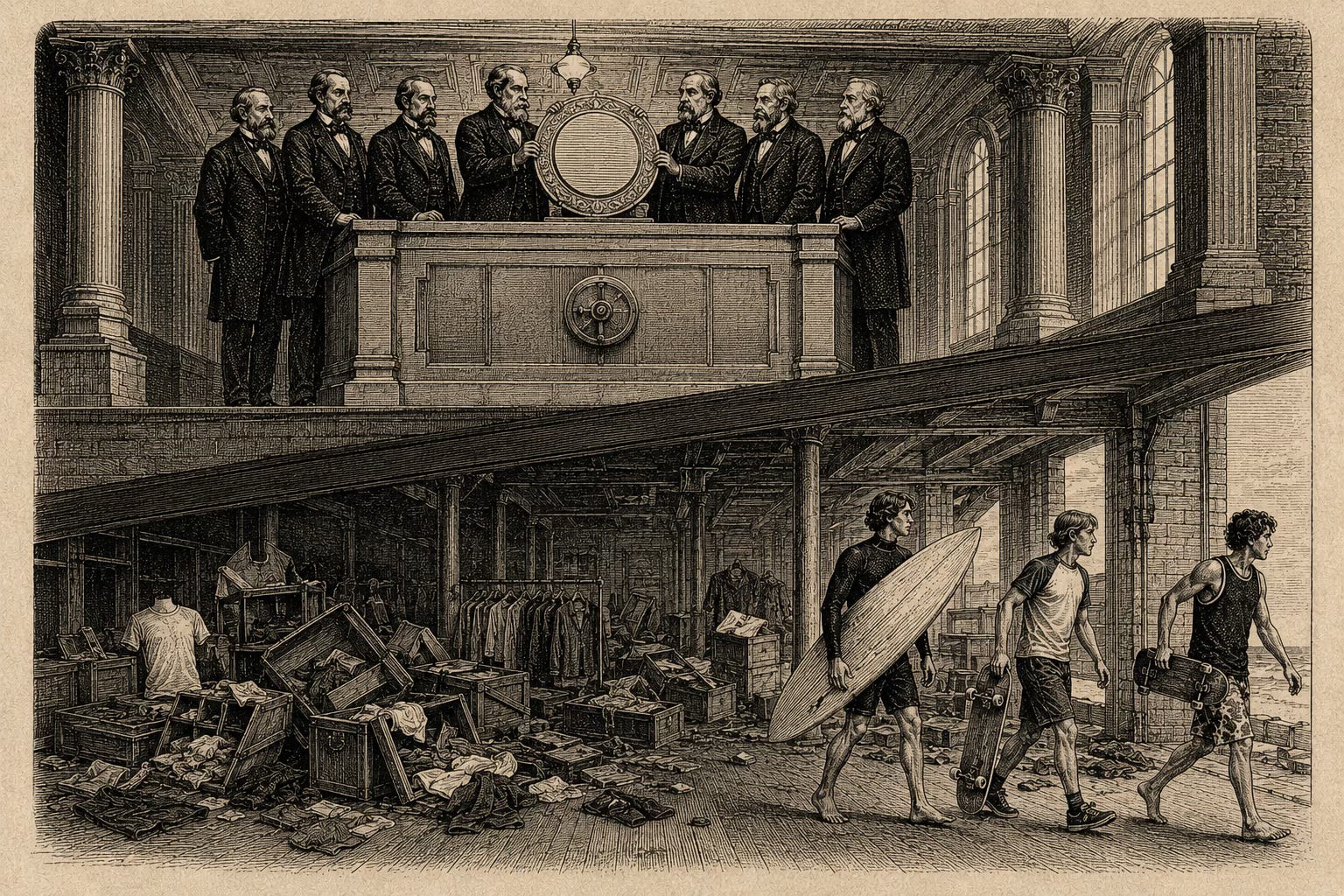
A senior secured credit facility against the operating company would have produced different incentives. Not because senior debt is friendlier to athletes than equity. Because senior debt with the right covenants would price athlete retention as a covenant on the cash flow. Athlete retention metrics tied to consumer engagement, sponsorship roster size, and team participation in product development would feed into a covenant package. A covenant breach would trigger a reset on advance rates, not a cash sweep on the operator. The lender would have an interest in protecting cultural equity because it supports the cash flow that services the debt.
The covenant package on a properly structured action sports facility would carry six elements. Minimum athlete roster size by category (surf, skate, snow, BMX, moto). Minimum aggregate athlete spend as a percentage of marketing budget. Minimum athlete-driven engagement metrics measured against a documented behavioral cohort framework. Reporting cadence on team activity across owned and earned channels. Material adverse change provisions tied to flagship athlete departures. Cure rights that let the operator replace departing athletes on a defined timetable before triggering covenant defaults. Each element converts a discretionary marketing line into a contractual obligation that the lender can audit, monitor, and enforce. The cash flow that services the debt is the cultural equity that the athletes carry. Protect the athletes, protect the cash flow, protect the debt service. The covenant package writes the discipline into the capital structure.
That structure exists in adjacent asset classes. Senior secured facilities against music catalogs include covenants on master and publishing administration arrangements, as changes in administration affect collection efficiency and, in turn, cash flow. The same logic applied to action sports brands would treat the athlete roster as the master administration of the cultural cash flow. Material changes to the roster trigger covenant tests. The lender protects the asset.
The capital structure is the variable. The brand is the constant. Buyout equity into Liberated produced the strip. Senior secured credit with athlete-retention covenants would have produced the opposite. Same operator. Same brands. Same athletes. Different ending.
The deeper structural point is that action sports brands are athlete cash flow assets dressed as logos.
The audience knows Volcom because of the team. The audience knows Roxy because of Kelia Moniz and the women’s surf line that was built around her. The audience knows Billabong, Quiksilver, and RVCA through the riders, surf films, contest teams, and the cultural pipeline that runs through professional and semi-professional athletes. The trademark on the shirt is the legal asset. The cash flow that monetizes the trademark is the audience relationship that the athletes have built.
Capital that does not understand that distinction destroys the asset every time it tries to harvest the logo without preserving the team. Capital that understands the distinction prices the team into the covenant package and gets paid back on schedule.
If the music playbook had been ported to Liberated, the deal would have been a senior secured term loan facility against the operating company, with covenants tied to athlete retention, team roster integrity, and engagement metrics through a measurable behavioral framework. The advance rate would have been priced against documented athlete commercial cash flow, with information rights on team-by-team performance and the right to test covenant compliance quarterly. The athletes would have been protected by the credit, not stripped despite it. The brands would still operate today. The license at ABG would still be live. None of that requires a different operator. It requires a different capital structure.
That structure is not exotic. It is the same architecture that asset-backed lending shops apply to franchise restaurant operators, music catalogs, and royalty interests. The diligence is the same. The covenant package is adapted to the cash flow profile. The pricing is set by the rating-agency template once the deal type has been benchmarked.
There is no benchmarked deal type for action sports brand operators yet. Whoever runs the first one prints the comp.
The action sports cohort is broader than the apparel category. Skate, surf, snow, BMX, moto, and the adjacent endurance categories share the same structural pattern. Athletes carry the cultural equity. Brands monetize the equity through apparel, hard goods, sponsorships, and licensing. The brand operator's capital structure determines whether the athletes are protected or stripped. Burton (privately held, family-owned), K2 (Kohlberg-owned since 2017), the Nidecker Group (which acquired Etnies and ThirtyTwo from Sole Technology in 2024), Vans inside VF Corporation, and the surviving independent shops in skate, surf, and snow all run on the same cash-flow profile that Liberated misjudged. Each is a candidate for a senior secured operator-level facility with athlete-retention covenants. The first one to clear builds the franchise across the category.
The Athlete Venture Wave
The biggest names in athlete-built business are deploying capital today, and almost all of it is moving as equity because the credit-side template doesn’t yet exist.
Maverick Carter and LeBron James sold a minority stake in SpringHill Company to RedBird Capital, Nike, Epic Games, and Fenway Sports Group in October 2021 at a valuation of $725 million. SpringHill is the production company behind The Shop, Space Jam: A New Legacy, and a slate of branded content tied to LeBron’s commercial relationships. The cash flow below is among the most documented athlete commercial revenue in modern sports. LeBron’s endorsement deals run with Nike on a lifetime contract, as well as with PepsiCo, Walmart, and other long-tenured commercial partners. The duration profile of his contracted income runs longer than most music catalogs that the rated ABS market is currently buying.
That deal got equity. The investors took ownership. LeBron’s existing cash flow could have serviced senior secured paper. The structure for music catalogs at this level of documentation typically provides 50% to 65% advance rates against historical cash flow, with information rights on the underlying contracts. SpringHill could have raised $300 to $400 million in senior secured credit against documented contracted income, deployed it into production, owned the resulting library on the operator’s balance sheet, and serviced the debt out of the existing endorsement and broadcasting cash flow. The equity position would have been preserved.
The credit deal didn’t happen because no rated ABS template exists for an athlete's commercial cash flow. The asset-backed finance desks that price music catalogs have not yet built the framework for athletes. The first one to do it captures the template, the relationships with the agencies that represent the athletes, and the standing to price every subsequent deal in the category.
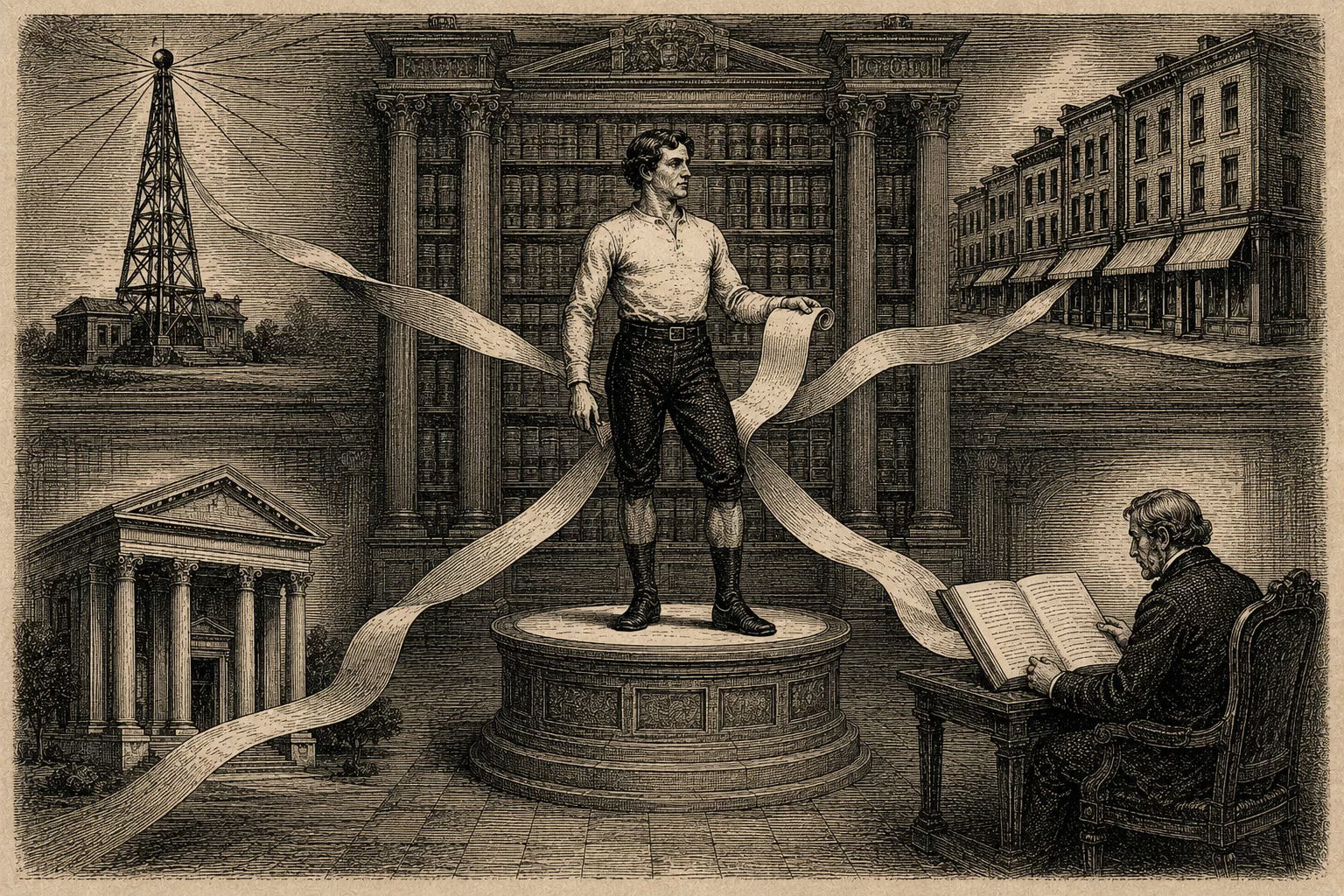
Tom Brady’s commercial stack is the second case. Brady’s 10-year, $375 million Fox broadcasting deal, signed in May 2022 and active beginning in the 2024 season, has an average annual value of $37.5 million over the term. The agreement carries the credit profile of a long-dated broadcasting commitment from Fox Corporation's public balance sheet. The exact annual cadence and the guaranteed vs. unguaranteed split are not publicly disclosed, as is standard for broadcasting talent contracts. The annuity-equivalent profile is what matters for the credit case. That contract alone is a financeable asset.
Stack the rest of his book around it. TB12 Sports is a wellness brand and methodology company. 199 Productions, his media holding. BRADY apparel is the joint venture with WHP Global. His founding Chief Wellness Officer role at eMed, with an undisclosed equity stake. Ownership positions in the Las Vegas Raiders and the Birmingham City football club. Each one has a different cash flow profile. The Fox contract is the cleanest. Senior secured paper against it alone would clear at investment-grade spreads in any rated ABS context once a template exists. Nobody has run that deal yet.
Patrick Mahomes runs an investment portfolio through 2PM Ventures, his family-office investment vehicle, that has invested in the Kansas City Royals and the Kansas City Current of the NWSL, and holds a minority position in Alpine F1 through the Otro Capital-led syndicate that took a stake in 2023. Mahomes’s commercial book includes State Farm, Adidas, Hy-Vee, Whoop, Subway, and a long roster of consumer brand deals. His playing-side compensation runs on the 10-year, $450 million extension signed with Kansas City in July 2020, which has been restructured multiple times for cap purposes since 2024, with the term still through the 2031 season. The forward cash flow is documented. The behavioral durability of his commercial reach has been measured by every brand he works with. Senior secured paper against contracted endorsement income and broadcasting compensation, with covenants on team performance and continued playing status, would price tighter than most music catalogs the rated ABS market is currently buying. Mahomes deploys equity because no other instrument exists for the cash-flow profile he carries.
Naomi Osaka built KINLO and the Hana Kuma media company. The latter has produced documentary series and branded content with documented cash flow that should be financeable on a small-but-scalable senior secured facility. Serena Williams runs Serena Ventures with $111 million in deployed capital across 85 portfolio companies, with a track record that should command institutional credit treatment if structured. Russell Wilson, Aaron Rodgers, and Eli Manning all run holdcos and operating companies built on documented commercial cash flow. Manning’s Omaha Productions runs the Manningcast and a slate of HBO- and ESPN-platform content, with broadcasting and sponsorship revenue that cleanly underwrites. None of those have raised senior secured credit against the documented athlete commercial cash flow because the template hasn’t been built.
The structural argument is direct. Athlete commercial cash flows are more documented than most music catalogs that the rated ABS market currently underwrites. Endorsement contracts, broadcasting commitments, equity grants, and licensing agreements flow through documented agent reporting that is institutional in shape if not yet in market practice. The collection infrastructure for athlete commercial revenue is structurally simpler than that of music collection societies was in 1997. Agents, business managers, and contract administrators at major athlete agencies report directly to their principals. The pipes exist. The audit standards are administered by the same accounting firms that audit the underlying brands. The reporting cadence is monthly or quarterly. The duration of the contracts runs from three years on most endorsement deals to ten years on the longest broadcasting agreements.
Compare the underwriting profile to a music catalog. A catalog buys behavioral cash flow with a 50-year decay curve and prices the discount rate against documented retention. The cash flow comes from millions of micro-transactions across streaming, mechanical, sync, and performance. Auditing the cash flow requires trusting the collection societies and the publisher administrators. An athlete commercial book buys behavioral cash flow with a 5-to-10-year duration and prices the discount rate against contractually committed counterparties. The cash flow comes from large bilateral contracts with public companies, league offices, and major broadcasters. Auditing the cash flow requires reading contracts and confirming counterparty performance.
The athlete's book is structurally simpler. The duration is shorter. The counterparties are stronger.
The covenants are easier to write. The advance rate against documented historical cash flow could plausibly exceed the comparable music catalog advance rate at the same rating, because counterparty risk is lower.
A sample structure for an athlete commercial ABS would carry: the contracted broadcasting deal as the senior tranche collateral, with cash flow priority on the documented annual payments through the contract term. Endorsement deals from the longest-tenured commercial partners as the second tranche, with portfolio diversification across counterparties as a covenant. Equity grants from the athlete’s investment portfolio as a third tranche, valued at conservative discount rates and subject to information rights and lockup provisions. Licensing income on personal brand and likeness as the fourth tranche, with the athlete’s controlled holding company as the licensor of record. Each tranche prices independently. The senior tranche clears at investment-grade spreads. The mezzanine clears at single-B to BB-equivalent. The equity-tier sits below.
The data infrastructure point bears emphasis. Athletes today have endorsement contracts that flow through agent reporting at the major sports agencies. CAA Sports, WME Sports, Roc Nation Sports, Klutch Sports Group, Athletes First, Wasserman, and Excel Sports Management each run agent-side reporting on their athletes’ commercial books at a depth that institutional capital can audit. The agencies have already standardized contract templates, payment cadences, and counterparty reporting in ways that look like collection society infrastructure on the music side. The piece that’s missing is the credit-side audit framework that converts agent reporting into rated paper. Once one rating agency builds that audit framework for one major athlete book, every subsequent deal references it. The agency-side reporting is the equivalent of ASCAP and BMI on the music side. The credit-side audit is the equivalent of the Bowie Bond underwriting work Pullman did in 1996.
The only pieces missing are the rating-agency template, the first-rated deal, and the specialist fund that benchmarks the asset class. Whoever runs the first-rated athlete commercial ABS sets the template that every subsequent deal references. The fee economics on the structuring side compound for the desk that prints the first comp. The relationships with the rating agencies, the agencies that represent the athletes, and the institutional buyers that allocate to the rated paper consolidate around whoever runs the first three or four deals. Within five years, one or two desks will have the franchise. Today, none do.
That is the clearest open lane in private credit right now. The cash flow exists. The documentation exists. The collection infrastructure exists. The template is the gap.
The Creator Economy Distress Cycle
The creator economy distress arc has already produced its cautionary tales, and they all run on the same structural pattern. The audience extends real credit to the creator every time they purchase a product, sign up for a launch, speculate on a token, or pre-order an item. The creator has no balance sheet, no covenant, and no audited cash flow framework. The audience absorbs the loss when the creator fails to perform.
CryptoZoo is the most documented case. Logan Paul launched a play-to-earn NFT game in August 2021 that sold approximately $2.5 million in NFTs. Following a class-action lawsuit and a documentary investigation by Coffeezilla, Paul committed roughly $2.3 million in early 2024 to a unilateral buyback program for affected buyers (the related class action was later dismissed in late 2025). The audience funded the launch. The product never shipped at the promised quality. The audience took the loss. The creator’s existing revenue continued. No mechanism existed to subordinate the creator’s cash flow to the audience’s claim. Senior secured paper against Paul’s existing creator revenue, with the new product as the use of proceeds and a quality covenant on the deliverable, would have inverted the risk. The lender would have stood between the audience and the creator’s discretion. The audience’s exposure would have been priced and protected. None of that infrastructure exists.
Prime Hydration ran a different version of the same pattern. Logan Paul and KSI launched the brand in early 2022, built the audience-to-product pipeline, and scaled distribution through Walmart, 7-Eleven, and grocery retail chains. Sales reportedly hit $1.2 billion in 2023 before declining significantly through 2024 as inventory built up at retailers and demand cooled. The audience absorbed the volatility. The brand survived. The creators captured upside through equity. The risk-bearing structure was equity at the top, audience at the bottom, with no senior credit layer in between.
MrBeast Burger ran the most distilled version. Jimmy Donaldson partnered with Virtual Dining Concepts in 2020 to launch a ghost-kitchen burger brand. By 2023, Donaldson had filed suit alleging the operator’s product quality was so poor it was damaging his audience’s relationship with him. The case eventually settled, but the structure made the creator’s audience the unsecured creditor, and the creator had no covenant rights against the operating partner because he held no senior position in the operating company's capital structure. The audience trusted Donaldson. The product failed. The audience absorbed the trust loss. Donaldson absorbed the brand-equity damage. The operator captured the upside while the partnership was performing and walked away when it stopped.
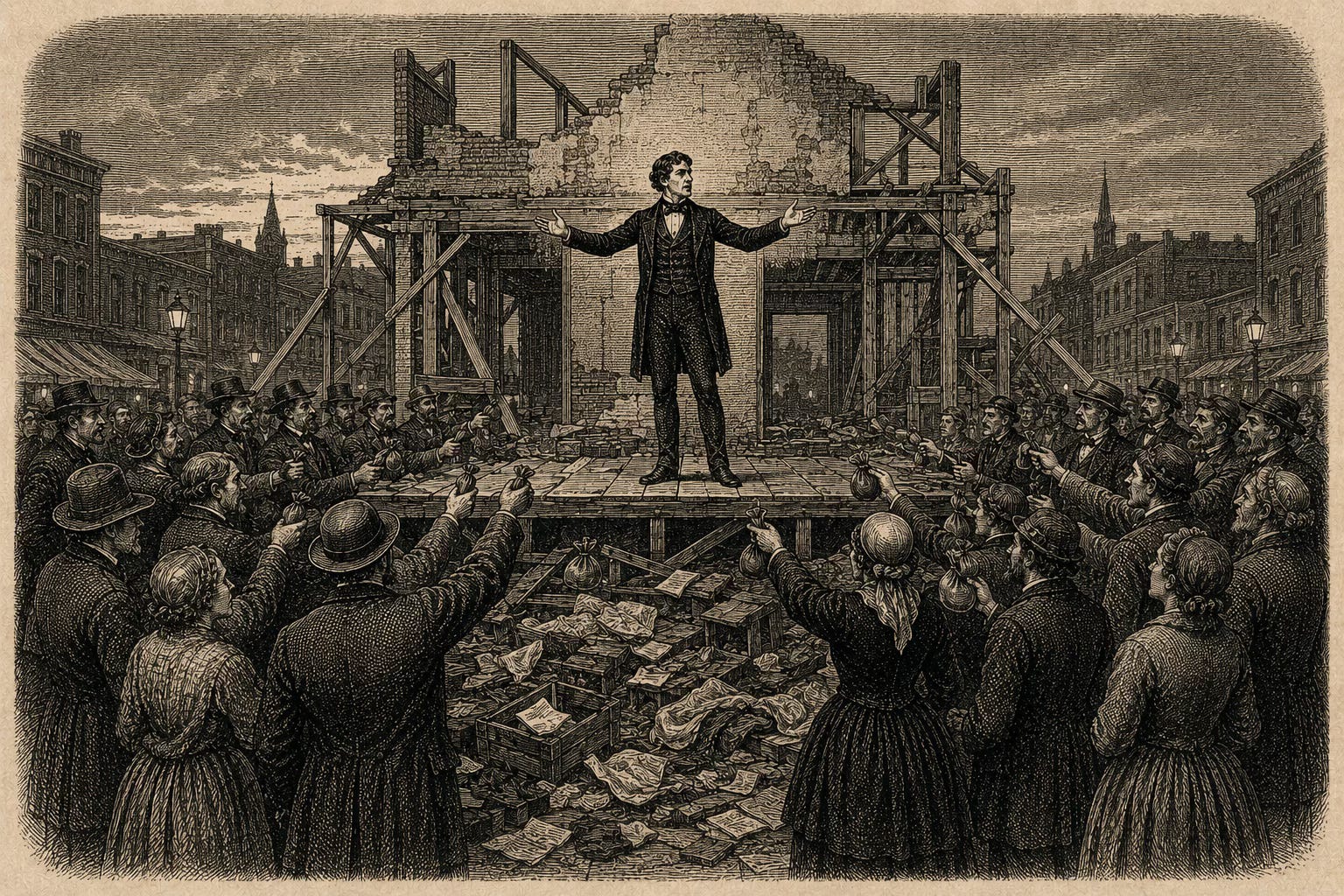
The structural answer is the same one music figured out thirty years ago. Senior secured paper priced against documented creator audience cash flows, with covenants on quality, brand integrity, and operating partner accountability. The audience extends real credit every time it engages. The creator economy has not yet built the institutional layer that makes that credit financeable for capital to step in alongside.
Spotter is the proto-architecture. The company raised $200 million in Series D funding led by SoftBank Vision Fund 2 in February 2022 at a $1.7 billion valuation and publicly committed to deploying $1 billion against YouTube creator catalogs as a forward-flow lending facility. Spotter buys forward years of the creator's AdSense revenue and pays the creator a discounted lump sum, which is repaid from the creator’s documented forward cash flow. That structure is exactly where royalty advance lending sat in music in the early 1990s. Bilateral. Off-balance-sheet at the platform level. Underwritten by a specialist shop with proprietary modeling. Not yet rated. Not yet a public ABS template. Not yet a benchmarked asset class. The institutional credit stack on top of the proto-architecture has not been built.
The Moonbug-Cocomelon transaction is the equity comp that proves the credit market hasn’t arrived yet. Candle Media acquired Moonbug Entertainment in November 2021 for $3 billion, including earn-outs, with a base purchase price of around $2.75 billion. Moonbug owned Cocomelon, Blippi, Little Baby Bum, and a slate of children’s IP, with cohort retention curves spanning multi-year toddler-age windows. A music catalog with the same documented behavioral cash flow and decay profile would have been priced as a BB- to BBB-rated ABS at 50% to 65% advance rates based on historical cash flow. Equity priced the same asset because there was no rating framework to price it as credit. Candle paid full equity for behavioral cash flow that should have been split between equity and debt.
Hello Sunshine, which was sold to Blackstone-backed Candle Media in 2021 for a reported $900 million, is another case. Behavioral cash flow priced as growth equity. The credit layer that should have sat underneath the equity stack didn’t exist.
The MrBeast IP is a third comp. Donaldson’s YouTube channel has documented advertising and platform revenue that runs into nine figures annually, with cohort retention curves that have compounded for nearly a decade. Music catalogs at this level of cash flow durability and audience documentation routinely raise senior secured paper at 50% to 65% advance rates. A senior secured facility against MrBeast’s documented YouTube cash flow could fund the production pipeline, expand the IP base, and preserve the founder’s ownership of the upside. The same logic applies to Dude Perfect, Smosh, the Sidemen, and a dozen other major creator businesses with documented multi-year cash flow. None has raised senior secured paper at the institutional credit shop level because the rating framework hasn’t been built.
The creator economy needs the equivalent of Bowie Bonds. One rated deal against creator audience cash flow, structured by a credit shop willing to do the bespoke work the first time, validated by a rating agency willing to issue a public letter on the deal. After that, every subsequent deal gets cheaper. The framework gets templatized. The specialist funds form. PE buyers sit at the top of the credit stack. The market follows the framework.
The data infrastructure supporting the creator credit case is far more developed than the music collection infrastructure was in 1997. YouTube Analytics reports daily watch time, audience demographics, retention curves, and revenue per thousand views for every creator with a monetized channel. Spotify for Artists reports stream-by-stream attribution, listener cohorts, save rates, and playlist performance. TikTok analytics reports view duration, completion rates, audience composition, and creator fund payments. Patreon, Substack, and OnlyFans report subscriber-level retention and lifetime value at depths that the publisher administrators on the music side never achieved.
The platforms have built collection societies in code.
The data is more granular, the reporting cadence is faster, and the audit trail is cryptographic rather than paper-based. Once the credit-side audit framework is built against platform analytics, the institutional credit case for creator audience ABS is structurally stronger than the music case at the same maturity.
The Spotter facility is one path to the first deal. The MoonBug-Cocomelon comp is another, in reverse. The next major creator IP transaction that includes a rated debt tranche prints the comp. The desk that structures it captures the template.
The Architecture That Ports
The music playbook works because the five layers compound. Each one depends on the prior. Walk the layers, and the architecture becomes legible. Map them onto the three adjacent asset classes, and the gaps become specific.
Layer one is documented behavioral cash flow. Music has ASCAP, BMI, SoundExchange, and the publisher royalty pipes. Action sports has athlete contracts, sponsorship reporting, and engagement data measured by every brand and platform involved. Athlete businesses have endorsement contracts, broadcasting agreements, and licensing income, all of which flow through agent reporting and public-company disclosures. The creator economy has YouTube Analytics, Spotify for Artists, TikTok analytics, and platform-reported audience cohorts more granular than music collection has ever been. Every layer-one piece is in place across all four asset classes. Music has been around the longest. The other three caught up inside the last decade.
Layer two is standardized collection. Music runs through SoundExchange and the publisher administrators with documented audit standards. Athlete cash flow runs through the major sports agencies (CAA, WME, Roc Nation, Klutch, Athletes First, Wasserman, Excel) on quarterly reporting cadences. Action sports cash flow runs through brand-level consumer panels, team reporting, and agent reporting on sponsorship revenue. The creator economy runs through platform analytics plus aggregator reporting via MCNs, talent management firms, and partner programs. The pipes exist. They just haven’t been organized as credit collateral. That work is structuring, not building.
Layer three is the rating framework. Music has Moody’s, Fitch, and S&P templates for catalog ABS deals, refined over more than a decade of issuance, with comparable transactions priced consistently. The other three asset classes have not yet produced their first rated deal. Whoever sponsors the first-rated athlete commercial ABS, the first-rated action sports brand credit facility, or the first-rated creator audience ABS captures the template. The economics on that first deal are split between the rating agency that issues the framework, the structuring desk that prices it, and the buyer that takes the senior tranche. The structuring desk on the first deal becomes the franchise on every subsequent deal in the category. Track record is the moat. The first deal is the moat-building event.
Layer four is specialist funds. Music has Hipgnosis, Round Hill, Primary Wave, Concord, and Kobalt at the publisher and catalog level, plus Spirit Music, Reservoir, and several smaller shops that aggregate catalogs and benchmark performance. The specialist fund is the buyer of the rated paper at the top of the credit stack, the price-discovery mechanism for portfolio-level catalogs, and the LP-side outlet for institutional capital seeking exposure to behavioral cash flow. Action sports brands, athlete businesses, and creator IP have nothing at scale yet. A few one-off vehicles have raised capital against pieces of the asset class. None has the multi-billion-dollar deployed AUM and the published track record that the music specialist funds have built. The specialist funds set the price discovery. Without them, every deal is bespoke. With them, the asset class clears at consistent spreads.
Layer five is PE entry at the top of the stack. Music has Blackstone, Apollo, and KKR at the top of the credit stack and the equity ownership layer. Blackstone took Hipgnosis private at $1.584 billion in 2024. Apollo backed Concord through multiple ABS issuances and the company’s catalog buying program. KKR-Chord Music issued rated ABS paper in 2022 and 2023. The PE entry validates the asset class for the institutional LP base and aligns equity-owner incentives with cash-flow durability. The other three asset classes sit in the pre-institutional phase. Action sports brands have private equity owners, but those owners are buying brands without the credit infrastructure underneath, and the operating capital structures they apply (see Liberated) often destroy the asset rather than preserve it. Athletes have venture capital and growth equity flowing into their holdcos, but no PE shop has yet built a senior credit position against athlete commercial cash flow. Creator IP has Candle, RedBird, Boat Rocker, and a few other media-focused funds, but the credit stack underneath them has not been assembled.

The five-layer model is testable. Where any layer is missing, the asset class clears at equity prices regardless of the underlying cash flow. Where all five are in place, the asset class clears at credit-grade spreads, and the ownership layer prices on a different basis than the credit layer. Music has all five. Action sports, athletes, and creators have walked the first one or two. The structural prediction is that credit-grade spreads will converge once the missing layers come online. The desk that builds the missing layer captures the spread compression as fee economics on the structuring side and as carry on the specialist fund side.

The work to port the playbook is structuring work. The cash flows arewha documented. The collection is standardized. The pipes exist. What’s missing is the rating-agency template, the first rated deal, the specialist fund that aggregates the asset class, and the PE buyer at the top of the stack. None of those four requires new technology. They require credit structuring discipline, operator alignment, and the willingness to print the first deal at a defensible spread without a comparable to anchor it.
A dozen athlete commercial books are ready for the first-rated deal today. Brady’s Fox contract is a $375 million 10-year annuity that prices cleanly at investment-grade spreads in any rated ABS context once a template exists. Mahomes’ commercial book is documented through 2PM Ventures and his agency reporting at a depth that supports a senior secured facility. SpringHill’s existing cash flow services senior paper at a defensible advance rate. Pick one and run it.
For action sports, the first rated operator-level facility could be priced against the operating cash flow of any of a half-dozen mid-cap brands that have survived the recent distress cycle. The covenant package on athlete retention, team integrity, and consumer engagement is structurable today. The advance rate is set against documented historical cash flow, with covenants protecting the cultural equity of the brand. The candidate set runs from the surviving independent skate, surf, and snow operators to the OEM-aligned shops with documented multi-year P&Ls.
The creator side has equally good candidates. Spotter’s portfolio. The major creator-led media operators with multi-platform distribution and documented audience cohorts. Moonbug’s existing IP, post-Candle integration, is structurable as a senior-secured facility against documented kids-content cash flow. Hello Sunshine’s existing book is similar. Each major creator-led production company within the Candle Media stack has documented cash flow to clear at credit-grade spreads. The deal architecture is structurable today.
The institutional buyers for the senior tranches are already deploying against music ABS at investment-grade spreads. The same buyers, at the same desks, will buy athlete commercial ABS at comparable spreads the moment the rating-agency template clears. The same logic applies to action sports brand credit and creator audience ABS.
The buyer base does not need to be built. The capital is already deployed in the adjacent asset class.
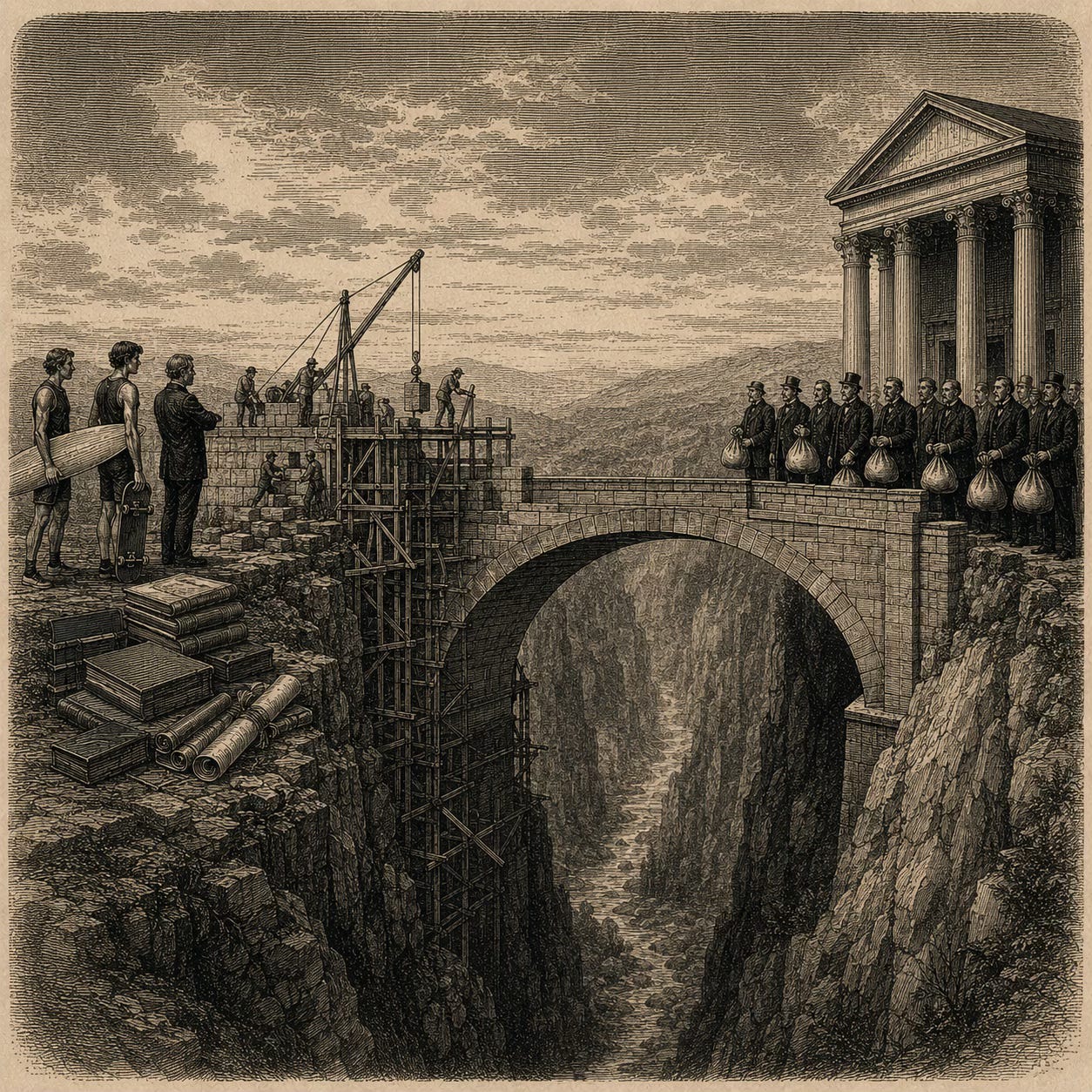
What needs to be built is the bridge from documented cash flow to rated paper. That bridge is the rating-agency template and the first rated deal that clears it.
What’s missing is a desk willing to do the structuring work the first time, a rating agency willing to issue the public letter, and a specialist fund willing to take the senior tranche. The economics on the first deal are skinny. The economics on the next 50 deals reference back to the first one. The structuring fee compounds across the franchise. The relationship with the rating agency, the agencies that represent the athletes, the operators in the action sports category, and the creator-side platforms consolidates around whoever runs the first deal.
That is the institutional opportunity. Not in the equity stack. Not in the platform layer. In the credit infrastructure that ports the music playbook into the three adjacent asset classes that already have cash flows, collection pipes, and duration profiles to clear at investment-grade spreads.
Closing
Capital does not create asset classes. Capital recognizes them when the cash flows are documented, the collection is standardized, and the rating framework is in place. Music spent thirty years building that recognition. Bowie Bonds in 1997 was the recognition event. Recognition Music Group’s $1.47 billion ABS issuance in 2024 was the institutional confirmation. The architecture is operating at scale.
The action sports brands, the athlete commercial cash flows, and the creator economy IP have already done the documentation work. The platforms built the collection infrastructure. The contracts exist. The duration profiles run. The behavioral cash flows are auditable. The only missing piece is the institutional credit desk that ports the music playbook forward into all three.
The structural rule is this. Every asset class that has been institutionalized started with one rated deal, structured by one credit desk, validated by one rating agency, bought by one specialist fund. Every subsequent deal in the referenced category referenced the first. The franchise consolidates around whoever runs the first three.
That desk is operating. The first deal is the question.
Why Subscribe
Because attention is the next great asset class, and the credit market is just starting to underwrite it correctly.
Every week, Attention Capital reads the deals other publications miss, applies a behavioral attention scoring framework to the assets that should be financeable, and draws the curves the sell side has not yet drawn. Sports rights are one curve. Streaming behavioral data is another. FAST owned-IP suppliers are a third. Athlete commercial ABS will be the fourth. Action sports brand credit will be the fifth. Creator audience ABS will be the sixth. Each piece builds on the last.
If you work in finance, this is where you see where the next $50 billion of institutional credit deployment lands before the term sheets are written. If you work in media or athletics, this is where you see how capital is starting to price the asset you have been building. If you allocate to private credit, this is the playbook for the asset classes that do not yet have a desk.
For more on attention as an asset class, visit attncap.com. Institutional research now available.